
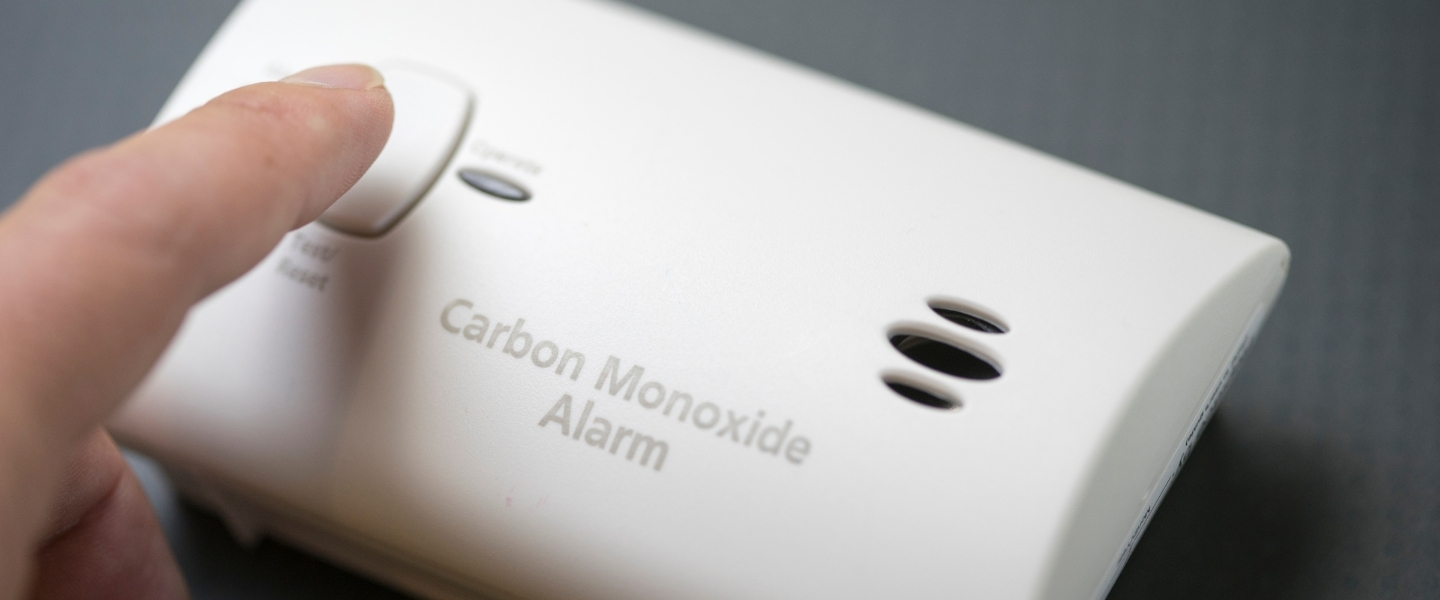
Can Your Chimney Cause Carbon Monoxide Poisoning? What Every Homeowner Needs to Know
Carbon monoxide poisoning kills. That’s the plain truth. In England and Wales, accidental carbon monoxide poisoning accounts for around 25 deaths every year, and many more people are hospitalised or left with lasting health effects — often without ever realising what made them ill. The gas is colourless and has no smell, which means you can’t rely on your senses to warn you.
Most people associate carbon monoxide with gas boilers or faulty appliances. That association is reasonable, but it’s incomplete. Your chimney — whether it serves an open fire, a wood-burning stove, a gas fire, or an oil-fired appliance — is a significant factor in how safely combustion gases leave your home. When a chimney is blocked, damaged, or poorly maintained, those gases have nowhere to go except back into your living space. And that’s where carbon monoxide poisoning becomes a very real risk.
Can a chimney cause carbon monoxide poisoning?
Yes, it can. A chimney’s entire purpose is to channel the byproducts of combustion — including carbon monoxide — safely out of your home. When that process breaks down, CO builds up inside.
A fire burning efficiently with good ventilation produces minimal CO, and what is produced travels up and out through the flue. The problem arises when that pathway is compromised. A blocked flue means combustion gases can’t escape. They reverse back down into the room, carrying carbon monoxide with them. This can happen gradually, with low-level exposure over weeks or months, or it can happen quickly in more severe blockage scenarios.
Common chimney-related causes of carbon monoxide build-up include:
- Blocked flues — from bird nests, debris, leaves, collapsed masonry, or a build-up of creosote and soot
- Cracked or damaged flue liners that allow gases to leak into voids within the chimney structure
- Negative air pressure inside a well-sealed, draught-proof home causing downdraught, pulling combustion gases back into the room
- Chimney cowls that have failed or been incorrectly fitted, causing back pressure
- Long periods without sweeping, allowing soot and debris to partially or fully obstruct the flue
The HSENI has made the point clearly: when your chimney or flue is blocked, there’s no way out for this highly poisonous gas except into your home. This is carbon monoxide advice about chimneys and flues that every homeowner with a solid fuel appliance, gas fire, or oil boiler needs to take seriously.
Does carbon monoxide go out the chimney?
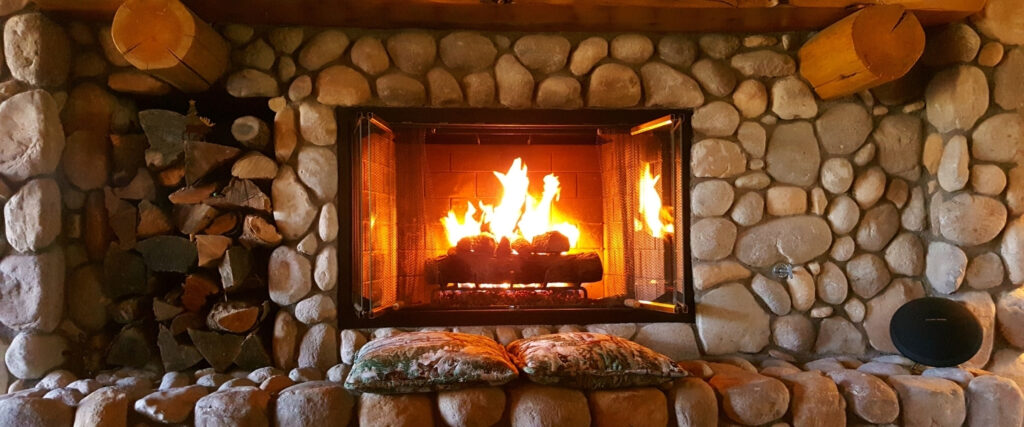
In a well-maintained system, yes — the vast majority of carbon monoxide produced during combustion travels up through the flue and out of the chimney pot, dispersing safely into the atmosphere outside.
The key conditions for this to work properly are a clear, unobstructed flue, an adequate supply of air to support good combustion, and proper draught — the upward flow of air through the chimney that carries gases away. When any of these conditions are disrupted, CO can accumulate inside your home instead of leaving through the chimney.
Airtight modern homes are particularly worth mentioning here. Draught-proofing, insulation upgrades, and sealed double glazing all reduce natural air infiltration. If your home is tightly sealed and your appliance is competing for the same limited supply of air as the rest of the house, you can get downdraught — where air is pulled back down the chimney rather than drawn upward. This creates exactly the conditions for chimney carbon monoxide to enter the living space.
Can you smell carbon monoxide?
This is one of the most important questions to address, because the answer — no, you can’t — is the reason carbon monoxide is so dangerous.
Carbon monoxide is completely odourless, colourless, and tasteless. There’s no sensory warning that it’s present. You won’t smell it, you won’t see it, and you won’t taste it in the air. The only reliable ways to know it’s there are a functioning carbon monoxide detector, or the onset of symptoms — by which point you may already have been exposed to harmful levels.
This is why any chimney carbon monoxide safety plan has to include a working CO alarm. Your nose can’t protect you here.
What are the warning signs of carbon monoxide poisoning?
There are many symptoms of CO poisoning, according to the NHS, but two of the most significant early warning signs are persistent headaches and dizziness. These are the body’s early response to reduced oxygen in the blood.
The reason these matter so much as warning signs is that they’re easy to dismiss. A headache, a feeling of being light-headed, a vague sense of not feeling right — these are the kinds of symptoms people attribute to stress, tiredness, or a mild cold. If you’re experiencing these regularly at home but feel better when you go outside or go to work, that pattern is significant, and carbon monoxide should be on your radar.
The NHS lists the full range of symptoms as:
- Headache
- Dizziness
- Nausea or vomiting
- Fatigue and confusion
- Chest and muscle pain
- Shortness of breath
- In severe cases) loss of vision and loss of consciousness
Children, elderly people, and those with existing heart or respiratory conditions are particularly vulnerable to the effects of CO exposure.
What can be mistaken for carbon monoxide poisoning?
Quite a lot, which is part of what makes low-level exposure so insidious. The symptoms — headaches, nausea, tiredness, dizziness, shortness of breath — are easily attributed to flu, food poisoning, stress, poor sleep, or general malaise.
There’s a diagnostic clue worth knowing: if multiple people in the same household are experiencing similar symptoms at the same time, that’s unusual for a standard illness. Similarly, if pets seem lethargic or unwell alongside the human occupants, that’s a sign worth taking seriously. Animals are often more sensitive to CO than humans and may show effects sooner.
The other key indicator is the environment-specific pattern. If symptoms improve markedly when you leave the house — during the working day, on holiday, visiting family — and return when you’re back home, that environmental correlation points strongly toward a household source rather than a personal illness. If you’re repeatedly attending a GP and symptoms keep returning, raise the possibility of carbon monoxide exposure directly with your doctor and ask specifically whether the right tests have been done. A blood or breath test needs to be carried out within four hours of being in the affected space to give reliable results.
How to tell if carbon monoxide is in the air
The direct answer is: fit a carbon monoxide detector. That’s the only reliable method.
A carbon monoxide alarm is a low-cost, high-importance piece of safety equipment. Current government guidance recommends fitting one in every room that contains an appliance burning gas, oil, coal, or wood. The alarm should be audible, and if your carbon monoxide alarm is beeping — particularly with a continuous alarm rather than the low-battery chirp — treat it as a genuine emergency.
Beyond the alarm, there are some indirect physical signs around your chimney and appliance that can suggest a combustion problem:
- Yellow or orange flames on a gas appliance that should burn blue
- Soot or black staining around the fireplace opening or appliance
- Excessive condensation on walls near the appliance
- Visible smoke coming back into the room when the fire is lit
These signs don’t confirm carbon monoxide in isolation, but they do indicate that combustion isn’t working as it should — and that warrants immediate investigation.
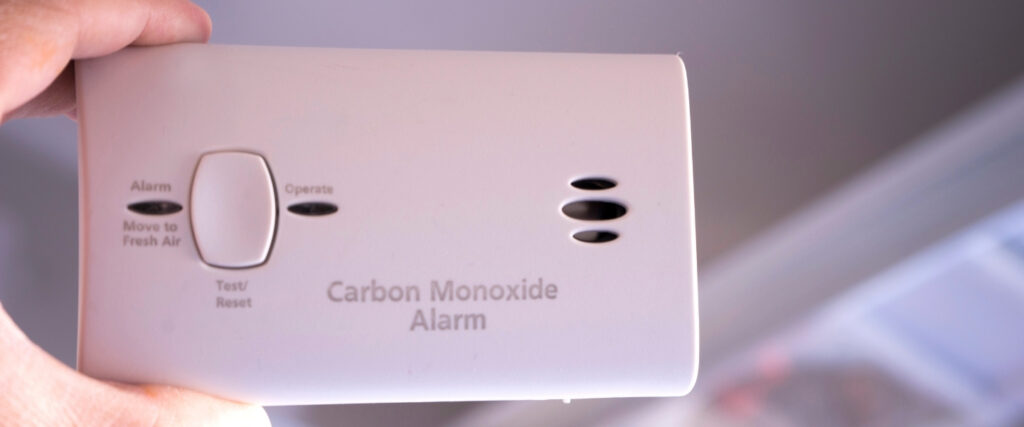
What to do if your carbon monoxide alarm goes off
If your carbon monoxide alarm is going off, act immediately. Don’t wait to see if it stops.
Stop using any appliances you believe may be producing CO, get everyone out of the building — including pets — open windows and doors as you go, and call 999 or the Gas Emergency number on 0800 111 999 if a gas appliance is involved. Get everyone who was in the property checked by a doctor, even if no one currently feels unwell. Carbon monoxide can cause harm at levels that don’t produce immediate symptoms, and medical assessment is the only way to know whether exposure has occurred.
Don’t re-enter the property until it has been declared safe by emergency services or a qualified engineer.
Why regular chimney sweeping reduces your carbon monoxide risk
A clean, clear chimney is one of the most effective protections you have against chimney carbon monoxide entering your home.
Regular sweeping removes the soot, creosote, debris, and obstructions that accumulate over time and restrict the flow of combustion gases up and out. A professional sweep also carries out a visual inspection as part of the service — checking for signs of deterioration in the flue liner, damage to the pot or cowl, evidence of bird nests or blockages, and any other issues that might compromise safe operation.
The current guidance from HETAS and the industry’s leading bodies recommends sweeping at least once a year for gas fires, twice a year for wood-burning stoves and open fires burning wood, and up to four times a year for solid fuel appliances burning coal or smokeless fuel. If your appliance is used heavily, or if you’ve had any issues with the appliance smoking back into the room, a sweep should happen sooner rather than later.
Alongside regular sweeping, fit a carbon monoxide alarm if you don’t already have one, keep your appliance well serviced, and make sure the room has adequate ventilation. Don’t block air vents or seal up the room completely when using a solid fuel appliance.
At The Sweeping Company, we offer professional chimney sweeping for both domestic and commercial properties, carried out by trained, fully insured sweeps who know exactly what they’re looking for.
Every sweep we carry out includes a thorough inspection of the flue and chimney system — it’s not just about removing soot, it’s about making sure your chimney is doing its job safely. If we identify any concerns during the sweep, we’ll tell you clearly what we’ve found and what we’d recommend next. We also offer CCTV chimney surveys for a more detailed look inside the flue, which is particularly useful for older chimneys or if you’ve recently moved into a property and have no records of previous maintenance.
Carbon monoxide advice around chimneys consistently points to the same conclusion: a properly maintained chimney is a safe chimney. Book your sweep, fit your alarm, and don’t leave it until something goes wrong.


