
Chimney Leaking? Here’s Warning Signs, Causes & How to Fix It
A leaking chimney is one of those problems that tends to creep up quietly. You spot a damp patch on the chimney breast. You notice wallpaper peeling near the fireplace. You hear a dripping sound from inside the flue after a heavy downpour. It’s easy to assume it’ll sort itself out, or that it’s something else entirely — a roof tile, a blocked gutter, condensation. But if your chimney’s leaking, ignoring it will cost you far more in the long run than dealing with it promptly.
The good news is that chimney leaks are well understood, and in many cases, regular chimney sweeping plays a direct role in catching — and even preventing — them. Here’s everything you need to know.
How do you know if your chimney is leaking?
Chimney leaks are notoriously easy to misread. Water has a habit of travelling a long way from its source before it becomes visible, which means the leak and the damp patch are often in completely different places. That’s why so many homeowners end up chasing the wrong cause for months.
The most common signs that your chimney is leaking include:
- Damp patches or brown staining on or near the chimney breast — at any level of the property, including upstairs rooms
- Peeling or bubbling wallpaper close to the chimney
- Water in the fireplace or at the base of the flue
- A dripping sound inside the chimney after rain
- Rust or corrosion on your fireplace grate, damper, or flue pipe
- A musty smell coming from the fireplace, especially after wet weather
- Mould or mildew appearing on walls adjacent to the chimney breast
If you’re noticing any of these, your chimney is the most likely culprit — even if the signs are appearing a few rooms away from the stack itself.
One thing worth knowing: not all chimney moisture comes from an active leak. Condensation inside the flue can produce similar-looking symptoms, particularly in chimneys that are used infrequently or where a flue liner is absent or damaged. A chimney sweep can help you work out whether you’re dealing with a penetrating leak or a condensation issue — and either way, they’ll tell you what needs to happen next.
Why is my chimney leaking when it rains?
Rain is the most common trigger for a visible chimney leak, and that’s because your chimney stack sits fully exposed to the elements at the top of your house. Every downpour, every freeze-thaw cycle, every period of high winds — your chimney takes the full force of all of it.
There are several places where rain can get in, and understanding them helps you know what you’re dealing with.
Flashing failure
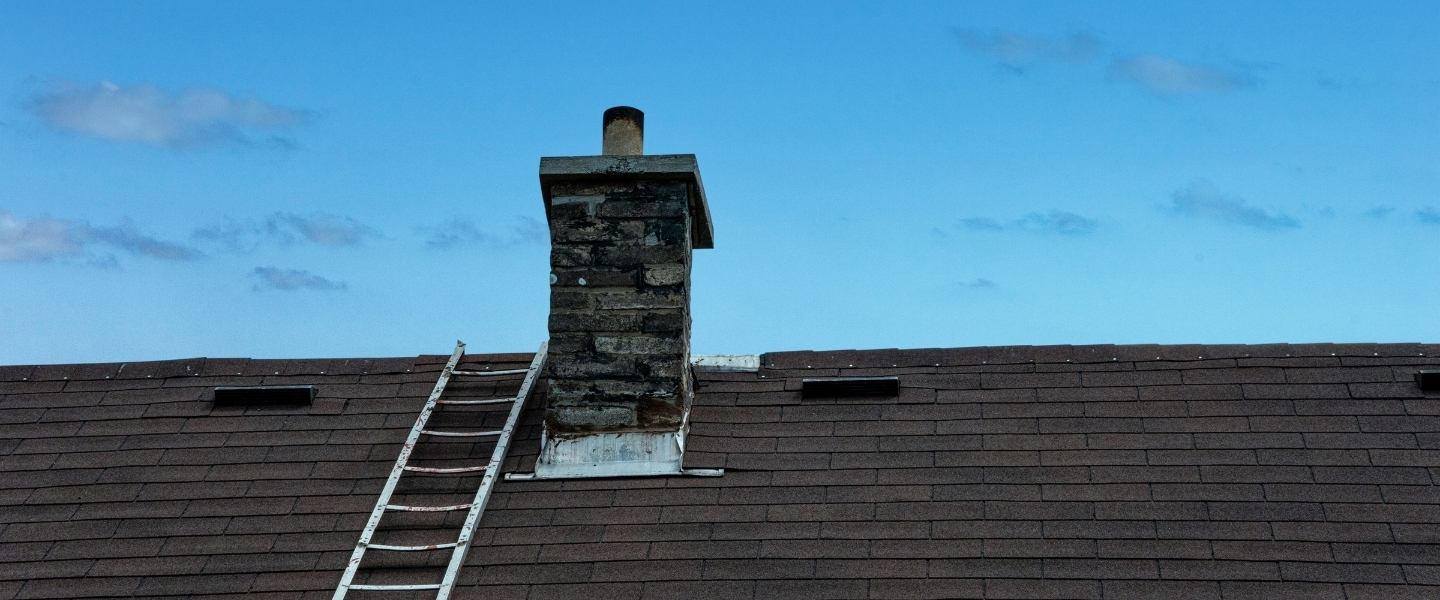
Flashing failure is one of the most frequent causes. Flashing is the lead or metal seal that runs around the base of your chimney stack where it meets the roof. When it works properly, it’s watertight. But over time, lead flashing can lift, crack, or pull away from the brickwork — and once that seal breaks, rainwater channels straight into the junction between the chimney and the roof. This can look like a roof leak, which is why it’s often misdiagnosed.
Damage to the chimney pot or cowl
The chimney pot sits at the very top of the stack, and a cowl or cap fitted over it is designed to stop rain — and birds and debris — from falling straight into the flue. If the pot is cracked, the cowl is missing or broken, or the mortar holding the pot in place has deteriorated, rainwater has an unobstructed route directly down the flue.
Deteriorating mortar joints
Cracked or deteriorating mortar joints between the bricks of your chimney stack also let water in. This is known as spalling, and it’s accelerated by the freeze-thaw process: water seeps into hairline cracks, freezes, expands, and widens the crack. Over several winters, what starts as a minor imperfection becomes a serious structural issue and a significant source of water ingress.
Chimney haunching or flaunching damage
The chimney haunching or flaunching — the mortar cap that surrounds the base of the chimney pot — can also crack and crumble with age. When it goes, rainwater collects in the cracks and seeps down into the stack.
Porous brickwork
Even without visible cracks, older chimney brickwork can become porous over time and absorb rainfall. In a heavy or prolonged downpour, this absorbed water can work its way through the stack and into the internal structure of the chimney breast.
Chimney blockages
Blocked or debris-filled flues can contribute to moisture problems. When a flue is clogged with soot, bird nest material, or debris, it traps moisture inside. That moisture has nowhere to go and gradually works its way into the surrounding masonry. This is where regular chimney sweeping becomes especially important — a clear, clean flue drains and ventilates properly.

What to do if your chimney is leaking
The first thing to do is resist the urge to ignore it or assume it’ll dry out on its own. Water damage compounds quickly, particularly if it’s getting into timber joists or the internal structure of the chimney breast. Act sooner rather than later.
- Get a professional in to assess the chimney: This is the most important step. A qualified chimney sweep can inspect the flue from inside the property, and depending on what they find, may recommend a CCTV chimney survey to get a full picture of the flue’s condition. A survey is particularly useful when the source of a leak is unclear or when several issues might be at play simultaneously.
- Don’t assume it’s the roof: This is worth repeating, because a significant number of chimney leaks are initially blamed on roof tiles or felt. If your roofer can’t find any damage to the roof itself, turn your attention to the chimney — specifically the flashing, the flaunching, and the pot.
- Keep a record of when the leak appears: If it only happens during heavy rain or when rain is coming from a particular direction, that’s useful diagnostic information. Share it with whoever’s inspecting the chimney — it can point directly to the likely cause.
- Book a chimney sweep if you haven’t had one recently: A sweep will clear the flue of debris, soot, and any blockages that might be contributing to moisture retention. They’ll also get a close-up view of the pot, the flaunching, and the top of the flue — and they’ll flag anything that doesn’t look right. Many leaks are caught during a routine sweep, before they’ve had the chance to cause serious damage.
How do you fix a leaking chimney?
The fix depends entirely on the cause, which is why getting a proper diagnosis first is so important. Here’s how the most common causes are typically addressed.
- Flashing repair or replacement is the solution when the lead seal around the chimney base has failed. This is roofing work, often carried out by a roofer alongside a chimney specialist. In some cases, the original flashing can be resealed; in others, it needs to come out and be replaced entirely.
- Repointing the chimney stack addresses deteriorating mortar joints. A specialist will rake out the old, crumbling mortar and replace it with fresh mortar, restoring the weathertight integrity of the brickwork. This is high-level work that requires scaffolding access and should always be done by someone with experience of chimney and masonry work.
- Replacing cracked or broken chimney pots and fitting a new cowl stops rain entering from the top of the flue. If the pot is structurally sound but the flaunching around its base has cracked, repointing the flaunching alone may be sufficient.
- Applying a breathable chimney waterproofer to the external brickwork is sometimes recommended for porous stacks. This is a treatment that allows moisture to escape from the brickwork while preventing rain from penetrating — it’s not a substitute for structural repairs, but it can provide useful additional protection once other issues have been resolved.
- Having the chimney swept deals with debris and soot build-up that’s contributing to moisture retention inside the flue. It’s often the first practical step, and it sets up every subsequent inspection and repair with better visibility and access.
It’s worth being clear that chimney repair work — flashing, repointing, structural masonry — falls outside the scope of chimney sweeping. At The Sweeping Company, we’ll tell you honestly what we can see and what needs attention, and we’ll point you towards the right professionals for any structural work that’s required.
Does regular chimney sweeping help prevent leaks?
A chimney sweep does more than clean the flue. Every sweep is also an opportunity for a trained eye to spot the early signs of problems that, left alone, develop into leaks.
During a sweep, we’re checking the condition of the flue liner, the state of the chimney pot, the integrity of the flaunching, and the general condition of the internal stack. We’re watching for unusual moisture, for debris that suggests a blockage, and for any structural changes since the last visit. Things that a homeowner can’t see from ground level, and might not notice until there’s a stain on the wall, are often visible to us during a routine sweep.
A clear, well-maintained flue also handles moisture better. Soot and creosote — the by-products of burning solid fuel — are both hygroscopic, meaning they absorb and hold moisture. A heavily sooted flue retains moisture that then works on the surrounding masonry from the inside. Regular sweeping removes this build-up and keeps the flue in a condition where it can ventilate and drain properly.
For domestic properties, we recommend sweeping at least once a year for gas fires, and once or twice a year for solid fuel appliances — more frequently if they’re in heavy use. For commercial properties, the frequency should reflect usage levels and any relevant industry guidance.
Think of an annual sweep as the chimney equivalent of a boiler service: it keeps things running safely, and it catches problems while they’re still small.
Can you claim on house insurance for a leaking chimney?
This is a question we get asked a lot, and the honest answer is: it depends on your policy and on the cause of the leak.
Most standard home insurance policies will cover sudden and unexpected damage — a chimney pot blown off in a storm, for example, or damage caused by a falling tree. In these cases, the resulting water damage to your property is usually covered, and you’d be able to make a claim.
What insurance policies typically won’t cover is damage caused by gradual deterioration, lack of maintenance, or wear and tear. If your chimney has been slowly letting in water because the flaunching has crumbled over years, or the flashing has been failing for several winters, insurers will generally view this as a maintenance issue rather than an insurable event. In these situations, the cost of repair falls to the homeowner.
The practical implication of this is significant: a chimney that’s regularly swept and inspected is a chimney with a documented maintenance history. If you do ever need to make a claim, evidence that you’ve been maintaining the chimney properly strengthens your position considerably. An unswept, uninspected chimney — where deterioration has clearly been going on unchecked — puts you in a much weaker position with an insurer.
So while chimney sweeping isn’t an insurance product, it does protect your ability to make a successful claim when you legitimately need to.
When should you call a chimney sweep versus a roofer?
If you’ve got a leak and you’re not sure who to call first, here’s a straightforward way to think about it.
Call a chimney sweep if: you can hear dripping or detect moisture inside the flue, you have a damp chimney breast but your roofer hasn’t found any roof damage, you haven’t had the chimney swept recently, or you want a professional assessment of the flue’s condition before committing to repairs.
Call a roofer if: you can see obvious damage to the roof tiles, the flashing is visibly lifted or separated from the chimney, or you’ve already had a chimney survey that has ruled out flue-related causes.
In many cases, the right answer is both — a chimney sweep to assess the flue and advise on the top of the stack, and a roofer for the flashing and roof-level work. The two trades work alongside each other on chimney leaks regularly, and a good chimney sweep will tell you clearly whether what they’re seeing is within their scope or needs a roofer’s attention.
Don’t wait for a chimney leak to get worse
Chimneys are built to last, but they need maintenance to do so. A small leak that’s caught early — during a sweep, or when a damp patch is still faint — is usually straightforward to address. A leak that’s been allowed to progress for one or two winters can mean water damage to the chimney breast, affected joists, mould in the wall cavity, and structural deterioration in the stack itself.
If you’ve noticed any of the signs mentioned in this article, or if it’s been more than a year since your chimney was last swept, book a sweep. It’s the most practical first step you can take — and it’s the best way to make sure a minor issue doesn’t turn into a major one.


