
What is a Fire Damper & How Does It Work in Your Building?
If your building has ductwork, you almost certainly have fire dampers hiding somewhere inside it. They’re not flashy, and you probably won’t think about them until you need them — but when a fire breaks out, these small, often overlooked devices can make the difference between a contained incident and a devastating disaster.
At The Sweeping Company, we work with business owners across the South West and beyond to test, maintain, and service fire dampers. This guide explains what they do, where you’ll find them, and why regular testing isn’t just best practice — it’s a legal and life-saving necessity.
What is a fire damper?
A fire damper is a passive fire protection device built into a building’s ventilation and ductwork system. Its job is simple but critical: to preserve the fire-resistance of walls, floors, and partitions when ducts pass through them. Without dampers, those openings would act like unguarded doorways, allowing fire and smoke to travel unchecked.
When correctly installed, a fire damper forms part of the building’s fire compartmentation strategy — the system that divides a property into fire-safe zones. By automatically sealing off ducts during an emergency, the damper helps to contain the blaze in one area, giving people more time to evacuate and emergency services a better chance of controlling the situation.
While you’ll rarely see a damper in day-to-day use, building regulations require them in most commercial and public spaces with HVAC systems. That makes them not just a safety feature, but a compliance requirement too.
What do fire dampers look like?
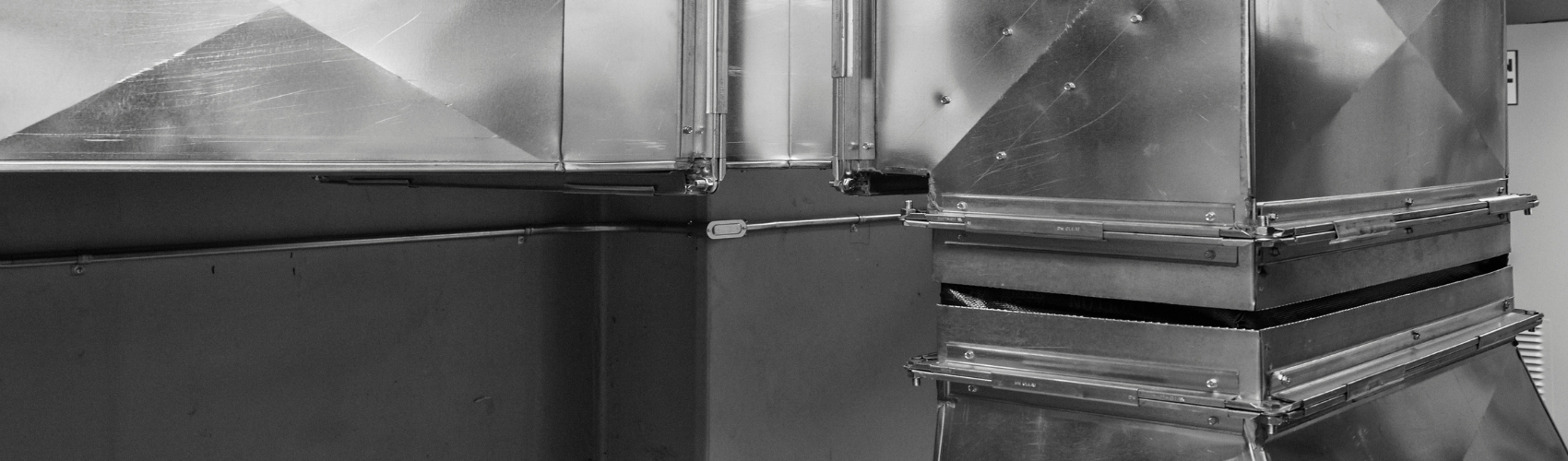
Fire dampers don’t exactly stand out. In fact, they’re designed to blend in with your ventilation system. Typically, a fire damper looks like a short metal sleeve inside the duct, fitted with a set of blades or a curtain that can shut when triggered.
Depending on the fire damper type, you might see:
- Curtain fire dampers: Thin sheets of galvanised steel folded together, which drop shut when a fire melts their fusible link.
- Multi-blade fire dampers: A series of horizontal blades that rotate to close the duct when activated.
From the outside, you’re more likely to notice the access hatch than the damper itself. Engineers need that hatch to test and service the damper. If your building has a duct fire damper hidden behind plasterboard or within a ceiling void, you might only spot the access panel rather than the mechanism itself.
Fire dampers vs smoke dampers
One of the most common areas of confusion is the difference between a fire damper and a smoke damper. A fire damper is triggered by heat and is designed to stop flames from spreading through the ductwork, while a smoke damper responds to smoke detection and uses a motorised mechanism to close, preventing toxic smoke from travelling into other parts of the building.
Since smoke inhalation is responsible for more fire-related deaths than flames themselves, both devices play an equally vital role in protecting lives. Many modern buildings now rely on motorised fire smoke dampers, which combine the functions of both and offer dual protection.
How does a fire damper work?
The principle behind a fire damper is simple: it keeps fire contained. Think of your ductwork as a network of highways running through the building — without protection, flames can spread rapidly along those routes. A fire damper acts as a barrier, closing off those pathways when danger strikes.
In standard models, this happens when heat from a blaze reaches the fusible link. Once the link melts, usually at around 72°C, the blades drop into place and shut the duct. More advanced designs use motorised fire smoke dampers that respond to signals from alarms or smoke detectors, allowing them to close even before flames arrive and blocking both heat and smoke. By sealing off the duct and restoring the fire resistance of the wall or floor it passes through, the damper prevents fire from spreading into other parts of the building.
This chain reaction happens automatically, making fire dampers an essential safeguard in every ducted system, from small offices to large hospitals.
Where are fire dampers located in a building?
Fire dampers are installed wherever ductwork passes through a fire-rated barrier, such as:
- In walls and partitions: You’ll find a fire damper in wall openings where ducts penetrate compartment boundaries.
- In floors: Ducts running between levels need dampers to prevent vertical fire spread.
- Inside ceilings and voids: Often hidden above suspended ceilings, accessible through service hatches.
If your building has extensive ducting, you might have dozens — or even hundreds — of dampers installed throughout. It’s not unusual for a large hospital or office complex to house thousands, each one critical to overall fire safety compliance.
Does a fire damper stop smoke?
Standard fire dampers are built to block flames rather than smoke. Once they close, they may reduce smoke movement to some extent, but because they are not airtight, smoke can still travel through the system.
For buildings that need reliable smoke protection, the solution lies in fire and smoke dampers — a more advanced class of damper, usually motorised, that seals ducts far more effectively. These are especially crucial in environments such as hospitals and care homes, where vulnerable people are at risk from smoke inhalation, in high-rise buildings where smoke can quickly spread between floors, and in commercial kitchens where ductwork often connects multiple high-risk areas.
At The Sweeping Company, we assess whether your system is fitted with standard fire dampers, smoke dampers, or a combination of both, and we make sure each one is tested and maintained so it will perform as intended when it matters most.
Fire damper types explained
Not all fire dampers are the same. The main types include:
- Curtain fire dampers: Simple, gravity-activated, and widely used.
- Multi-blade fire dampers: Better suited for larger ducts and more complex airflow systems.
- Motorised fire smoke dampers: Advanced, electrically operated, and capable of stopping both flames and smoke.
Choosing the right damper depends on your building’s size, ductwork design, and fire risk assessment. A small office may only need a handful of curtain dampers, while a hospital will require thousands of motorised dampers across its HVAC system.
Why regular fire damper testing matters
Think of fire dampers as insurance policies you hope never to cash in. They sit quietly inside your ductwork for years, waiting for the worst to happen. But if they haven’t been tested, cleaned, or maintained, they might fail just when you need them most.
Annual testing is the bare minimum. In high-risk environments — like hospitals, hotels, and large offices — more frequent checks may be necessary. By keeping your dampers in top condition, you’re protecting your staff, your customers, and your business as a whole.
Legal requirements and standards for fire dampers
In the UK, fire dampers fall under strict regulations. Key guidance includes:
- BS 9999: Code of practice for fire safety in the design, management, and use of buildings.
- BS EN 1366-2: The testing standard for fire resistance of service installations.
- BSB fire damper guidance: Covers installation and maintenance requirements.
Legally, all fire dampers must be tested at least every 12 months. For healthcare buildings, the HTM 03-01 standard applies, requiring more rigorous inspection.
Failing to test fire dampers isn’t just a compliance risk — it puts lives on the line.
Common problems we see with fire dampers
When we carry out inspections, we often see the same issues crop up:
- Obstructed access: Without a service hatch, dampers can’t be inspected.
- Corrosion and dirt: Dust, grease, and rust stop dampers from shutting properly.
- Damaged fusible links: If the link is missing or broken, the damper won’t trigger.
- Painted or jammed blades: Contractors sometimes paint over dampers, rendering them useless.
That’s why proper fire damper testing is so important. It’s the only way to be sure that every single unit will shut when it needs to.
How The Sweeping Company can help with your fire damper
At The Sweeping Company, our engineers don’t just sweep chimneys — we’re fully qualified in HVAC compliance, including the testing, inspection, and maintenance of fire dampers. We begin by carrying out detailed surveys to locate, test, and document every damper in your building, giving you a clear picture of your system’s condition. If we find a faulty unit, whether it’s a 100mm fire damper or a larger installation, we can carry out certified repairs or replacements to bring everything back up to standard. Just as importantly, we make sure your business meets all legal requirements under BS 9999, HTM 03-01, and other relevant regulations, so you’re never caught out during an inspection.
From commercial kitchens to hospitals, our work keeps buildings safe and compliant. Fire dampers may not be the most visible part of your safety system, but whether it’s a curtain damper hidden in a wall or a motorised fire smoke damper within a hospital ventilation network, each one is vital in preventing fire and smoke from spreading.
If you’re unsure when your dampers were last tested — or even how many you have — now’s the time to act.
Don’t leave fire safety to chance. Contact The Sweeping Company today to schedule your fire damper inspection and testing.


