
UK Smoke Control Areas: What You Need to Know Before You Light Your Fire
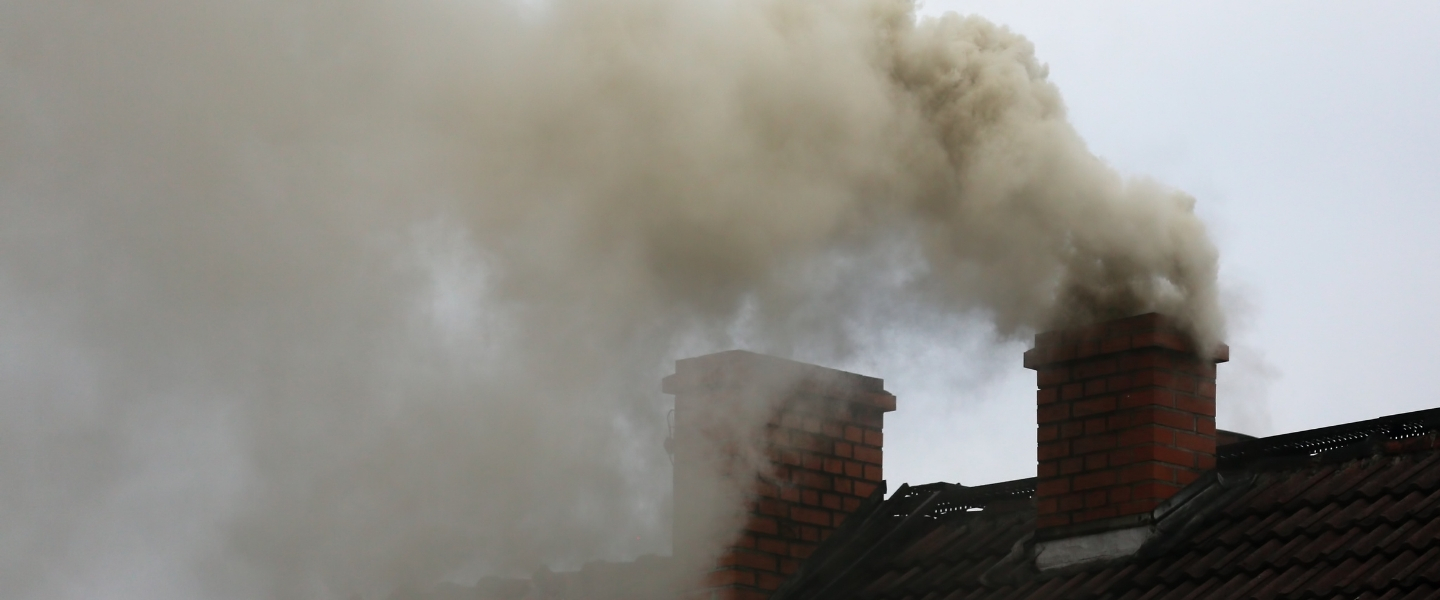
If you’ve got a fireplace, wood burner, or solid fuel appliance, it’s worth knowing whether your home sits inside a UK smoke control area — because the rules about what you can burn, and how, are strict. Getting it wrong can land you with a fine of up to £1,000, and that’s before you consider the impact on the air quality of the people around you.
At The Sweeping Company, we sweep chimneys right across the UK, and smoke control areas come up constantly in conversation. So here’s everything you need to know, laid out clearly.
Are there smoke free zones in the UK?
Yes — and there have been for decades. The Clean Air Act 1956 was passed as a direct response to the Great Smog of London in 1952, and it introduced smoke control areas — designated zones in which only smokeless fuels could be burned. That particular smog covered the capital for five days and resulted in around 12,000 deaths. It was a public health catastrophe, and the legislation that followed was a genuine turning point.
The Clean Air Act 1993 later consolidated the 1956 and 1968 Acts, and today it forms the legal backbone of how smoke control areas operate across the UK. Under this legislation, local authorities have the power to declare the whole or part of their district a smoke control area, and it’s an offence to emit smoke from a chimney of a building, from a furnace, or from any fixed boiler located within one.
So yes — smoke free zones exist across the UK, and they’re not a niche concern. Many towns and cities, particularly in England, have significant portions of their residential areas designated as smoke control zones. Greater London was fully smoke controlled by 1980, and Greater Manchester completed its programme by 1990. Since then, more areas have been added, and local councils continue to expand the boundaries. As recently as December 2024, the entire city of Oxford became a smoke control area, expanding the previously separate designated zones into one continuous area.
Scotland, Wales, Northern Ireland, and England all operate smoke control areas, though the specific legislation and enforcement powers differ slightly between nations. In Scotland and Wales, the power to authorise smokeless fuels and exempt appliances rests with ministers in the devolved administrations, while in Northern Ireland, separate legislation — the Clean Air (Northern Ireland) Order 1981 — applies.
How do I know if I am in a smoke control area?
The most reliable way to find out is to check with your local council. The environmental services department can confirm whether your property sits within a smoke control area. There are also interactive maps provided by the UK government, updated with data from local authorities, that allow you to check your address online. The Defra UK Air website hosts one of the most widely used versions of this tool, and it’s straightforward to use.
It’s worth knowing that smoke control area boundaries do change. Several local authorities have recently expanded their smoke control area boundaries, meaning some homes that previously fell outside the rules now have to comply. If you’ve moved recently, or if your area has undergone planning and development changes, it’s worth double-checking — don’t assume your status hasn’t shifted.
Some areas also use interactive maps on their own council websites where you can search by address to confirm whether you’re within a smoke control zone.
If you’re still unsure, give your council’s environmental health team a call. They’ll give you a definitive answer, and they’re also the people responsible for enforcing the rules — so it’s better to be informed than to find out through a complaint or a penalty notice.
What are the rules inside a smoke control area?
The rules are clear, even if they sometimes catch people off guard. Inside a smoke control area, you can only burn authorised fuel — unless you’re using a Defra-approved appliance, also known as an exempt appliance. Unauthorised fuels, such as wood, can only be burned in exempt appliances such as certain boilers, cookers, and stoves.
- Authorised fuels are smokeless solid fuels that have been tested and approved for use in open fires and non-exempt appliances. These include manufactured smokeless fuels like anthracite, semi-anthracite, and low-volatile steam coal. You’ll find the full up-to-date list on the Defra website.
- Exempt appliances are stoves, boilers, and cookers that have passed rigorous testing to confirm they can burn a fuel — including wood — without emitting smoke above permitted levels. Certification schemes like clearSkies make it easier to identify compliant appliances: any stove with a Level 3 or above clearSkies mark has been independently verified as Defra-exempt.
The key point here is that it’s the combination of fuel and appliance that determines legality. An open fire in a smoke control area must use authorised fuel, full stop. A Defra-exempt stove gives you more flexibility — but you still need to use the fuel types specified by the manufacturer.
In England, you may have to pay a penalty of up to £300 if your chimney releases smoke in a smoke control area. You can be fined up to £1,000 if you buy unauthorised fuel to use in a non-approved appliance. These aren’t trivial amounts, and they’re enforced by local council environmental health teams who can and do investigate complaints from neighbours.
What about outdoor fires? You can still use outdoor barbecues, chimineas, garden fireplaces, and pizza ovens inside a smoke control area, as long as these appliances don’t release smoke through the chimney of a building — for example, a summerhouse. Garden bonfires are also permitted, though you must follow the separate rules on bonfires.
What wood can I burn in a smoke control area?
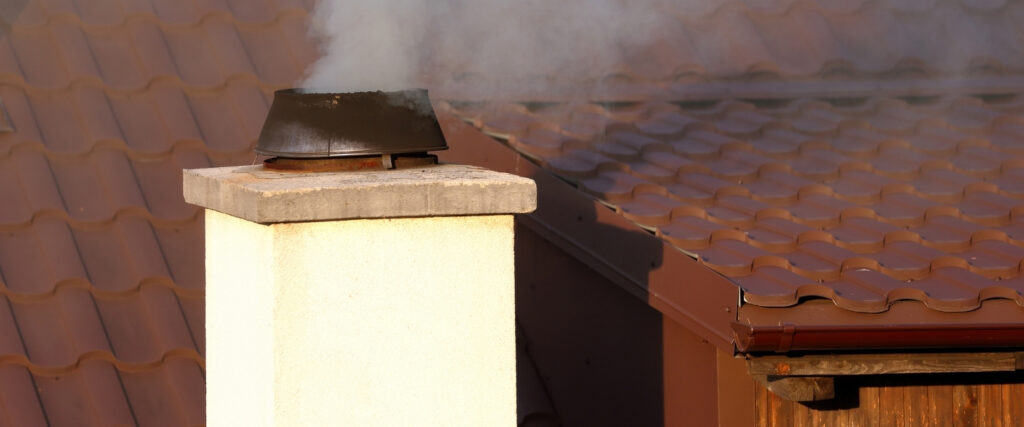
Wood is classed as an unauthorised fuel in smoke control areas — which means it can’t be burned in an open fire or a standard non-exempt appliance. If you want to burn wood legally within a smoke control area, you need a Defra-exempt stove or appliance.
Even then, the quality of the wood matters. Unauthorised fuels such as wood must be properly seasoned and can only be burned in exempt appliances. When purchasing wood, look for the Ready to Burn logo as a guarantee of good quality, dry wood. Ready to Burn is a certification scheme that confirms the wood has been dried to 20% moisture content or below — that’s the threshold at which wood burns cleanly and efficiently.
Wet or unseasoned wood is cheaper to buy, but it needs to be seasoned to less than 20% moisture before burning. Wet wood impairs efficient combustion, creates more smoke, releases more harmful particulates, and can also damage your stove and chimney liner over time. It’s also worth remembering that burning wet wood in a smoke control area — even in an exempt stove — undermines the whole point of having an exempt appliance in the first place.
If you season your own wood rather than buying kiln-dried logs, it’s worth investing in a moisture meter. They’re inexpensive, and they take the guesswork out of knowing when your logs are ready to burn.
You should never burn treated waste wood, such as old furniture, pallets, or fence panels. Treated wood and household waste can release harmful fumes including carbon monoxide, arsenic, hydrogen chloride, and cyanide. This applies everywhere — not just inside smoke control areas.
Why smoke control areas still matter
The health argument for smoke control areas is compelling. Burning wood and coal in non-Defra approved fireplaces releases harmful fine particles known as PM2.5, which can affect every organ in the body and increase the risk of lung disease, heart disease, and cancer. Children are particularly vulnerable, as exposure can stunt lung growth and affect development.
In the UK, the single biggest source of particulate matter air pollution (PM2.5) is from domestic burning. That’s a significant statistic, and it’s why smoke control areas aren’t just bureaucratic box-ticking. They’re a direct response to a real and ongoing public health challenge.
The good news is that complying with smoke control area rules doesn’t mean giving up the pleasure of a real fire. A modern Defra-exempt stove, burning properly dried wood or authorised fuel, can actually be a highly efficient, low-emission heat source. Switching from an open fire to a modern stove can reduce emissions by up to 90%.
Keep your chimney swept — it’s not optional
Whether you’re inside a smoke control area or not, a clean and well-maintained chimney is essential for safe, efficient burning. Soot and tar accumulate in your flue over time, reducing draw, increasing the risk of chimney fire, and making your appliance work harder for the same heat output. 40% of chimney fires occur between January and March — peak burning season — and the majority are preventable with regular sweeping.
At The Sweeping Company, we sweep domestic and commercial chimneys to the highest standard across the UK. If you’re in a smoke control area and want to make sure your appliance and fuel are compliant, we’re happy to advise during your appointment. And if you’re not sure whether your chimney is up to scratch for the burning season ahead, booking a sweep is always the right starting point.


