

Sick Building Syndrome: What It Is and What Your Chimney Has to Do With It
If you’ve been experiencing persistent headaches, a scratchy throat, or inexplicable fatigue — and those symptoms vanish the moment you step outside — your building might be making you unwell. Sick building syndrome (SBS) is a collection of symptoms people experience inside certain buildings. Air quality, pollutants, and artificial lighting are among the potential contributing factors, and symptoms typically improve once a person leaves the building.
It’s a frustrating condition because it doesn’t point neatly to a single cause or a single fix. But one major and frequently overlooked contributor is something we know well: the chimney. A neglected or poorly functioning chimney system can quietly degrade your indoor air quality over time — and in doing so, set the scene for sick building syndrome in your home or workplace.
What is sick building syndrome?
The World Health Organization formally adopted the term “sick building syndrome” in 1983 to describe situations in which building occupants experience acute health and comfort effects that appear linked to the time spent in a building, but where no specific illness or single cause can be identified.
Unlike building-related illness — which has a diagnosable medical cause — sick building syndrome is characterised by non-specific symptoms with no clear diagnosis. Symptoms are varied and can include respiratory problems such as coughs, chest tightness and shortness of breath, as well as general feelings of being unwell without any identifiable medical explanation.
The hallmark sign is simple: you feel better when you leave. You feel worse when you return. That pattern — repeated and consistent — is the key indicator that the building itself is the source of the problem.
What’s the main cause of sick building syndrome?
There’s no single culprit. The causes of sick building syndrome are complex, varied and not fully understood. Even though the exact mechanisms haven’t been proven, several factors play an important role in its development, including dust, volatile organic compounds (VOCs), biological contaminants, insufficient cleaning and maintenance, and poor ventilation.
A significant turning point in the history of SBS came during the energy crisis of the 1970s. Buildings were increasingly sealed against outdoor air to conserve energy, which inadvertently allowed harmful indoor pollutants to accumulate. This was a key driver in early investigations into sick building syndrome.
That pattern continues today in well-insulated, draught-proofed homes and energy-efficient commercial buildings — buildings that are designed to keep heat in but may simultaneously be trapping pollutants too.
The main categories of contributing factors include:
- Poor ventilation: Inadequate airflow means pollutants have nowhere to go. Fresh air dilutes indoor contaminants; without it, they build up.
- Chemical pollutants: VOCs from cleaning products, adhesives, office equipment, and building materials off-gas into the air.
- Biological contaminants: Bacterial spores, fungal spores, mould spores, pollen, and viruses can all cause allergic reactions or illness that falls under the SBS umbrella.
- Combustion byproducts: Pollutants from fireplaces and woodstoves can be back-drafted from the chimney into the living space, particularly in well-sealed, weatherised homes.
That last point is where chimney health becomes directly relevant to sick building syndrome — and it’s one that’s routinely underestimated.
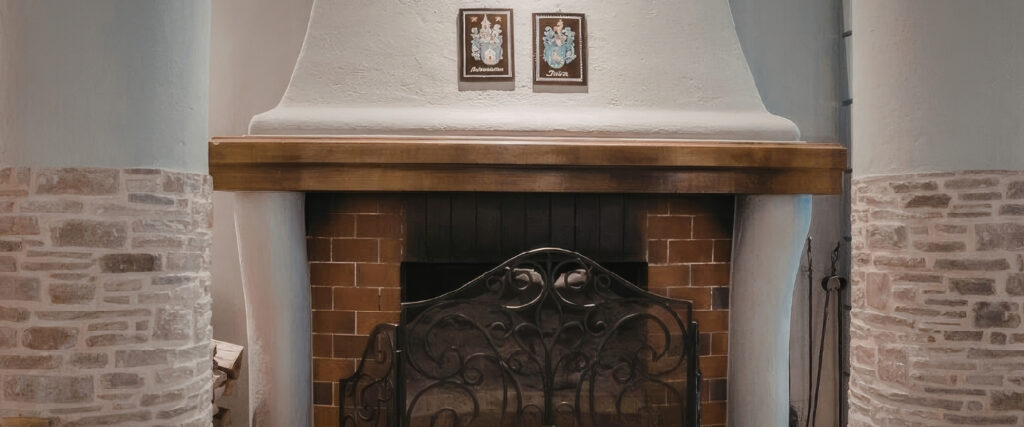
How chimneys contribute to sick building syndrome
A chimney that’s working properly removes combustion gases, smoke, and airborne particles from your living or working space. A chimney that isn’t working properly does the opposite: it allows those same pollutants to leak back inside.
Backdrafting and downdrafts
Downdrafting results when airflow reverses in a vent or chimney, pulling air and flue gases back into the house instead of expelling them. This can happen because of negative air pressure in the building, blocked flues, wind conditions, or poorly designed chimney systems. In a tightly sealed modern building, the problem is often compounded — the building is effectively starved of air, and the chimney acts as a pressure relief valve in reverse.
Poor chimney draft can lead to smoke backdrafts, carbon monoxide buildup, and an increase in allergens — all of which negatively impact indoor air quality and can pose health risks.
The symptoms this produces? Headaches, fatigue, eye and throat irritation, difficulty concentrating. In other words, exactly the symptoms associated with sick building syndrome.
Carbon monoxide: The invisible threat
Faulty heating equipment accounts for almost one-third of accidental carbon monoxide fatalities, and these can be caused by home or office heating systems including leaking chimneys, furnaces, and back-drafting from woodstoves and fireplaces.
Carbon monoxide is odourless and colourless. At lower, sub-acute levels — the kind that build up gradually from a poorly swept or blocked chimney — it doesn’t kill, but it does cause exactly the kind of vague, hard-to-diagnose symptoms that characterise sick building syndrome. Persistent headaches are often the first sign.
Soot, creosote, and particulate matter
A blocked or partially blocked flue doesn’t just affect draught — it can allow fine particulate matter, soot, and creosote deposits to enter the indoor environment. Because of negative pressure systems in the home, a downdraft can send small particles of soot through the air. These typically roll into ordinary dust in the home, but irritate eyes and airways over time.
Creosote — the tar-like residue that builds up inside unswept flues — can release volatile organic compounds into the air as it breaks down. VOCs are a well-established contributor to sick building syndrome.
Blocked chimney flues and poor combustion
When a chimney isn’t swept regularly, the accumulation of debris, soot, and blockages (bird nests are a common culprit) reduces the efficiency of the flue. Incomplete combustion produces higher volumes of carbon monoxide and other combustion byproducts, all of which then have a greater chance of entering the building rather than exiting cleanly through the stack.
How to check for sick building syndrome
There’s no single medical test for SBS, which is part of what makes it so difficult to diagnose. The most reliable indicator remains that improvement-when-you-leave pattern. If your symptoms consistently resolve when you’re away from the building and return when you go back, that’s a strong signal worth investigating.
Practically speaking, here’s how to start:
- Keep a symptom diary: Note when symptoms appear, how long you’ve been in the building, and whether they ease when you leave. Patterns become clearer over time.
- Talk to other occupants: If multiple people in the same building are experiencing similar symptoms, that points strongly towards an environmental cause rather than an individual health issue.
- Assess your ventilation: Are windows and vents unobstructed? Is there adequate fresh air circulation throughout the building?
- Check your chimney and flue system: When did you last have your chimney swept? Is your flue clean and clear? Are there signs of backdrafting — staining around the fireplace opening, soot deposits on nearby surfaces, or lingering smoky smells after the fire’s been out for hours?
- Consider professional air quality testing: Professional indoor air quality testing can measure VOCs, humidity, mould spores, and particulate matter in the air, giving a concrete picture of what’s circulating in your building.
- Inspect for mould: Mould is a significant contributor to SBS symptoms. Look in areas with poor ventilation, around window frames, and in roof spaces or cellars.
If your building has an active fireplace, woodburner, or any appliance venting through a chimney, getting a professional chimney inspection should be high on your list. A CCTV chimney survey is the most thorough way to assess the internal condition of a flue — it identifies blockages, structural issues, and anything that might be compromising the chimney’s ability to vent properly.
How do you fix sick building syndrome?
Fixing SBS means finding and addressing its sources. Because those sources are varied, there’s rarely a single-step solution — but there’s a logical order to approach it.
Start with ventilation
Changes in ventilation can dramatically influence levels of indoor pollutants, particularly when ventilation rates are low. Open windows regularly, ensure air bricks and trickle vents aren’t blocked, and consider whether your building’s ventilation system is fit for purpose.
Get your chimney swept and inspected
If you have a fireplace, woodburner, or any solid fuel or gas appliance that vents through a chimney, an annual sweep by a professional chimney sweep is essential. It removes the soot, creosote, and blockages that compromise draught and contribute to indoor air pollution. It’s also a condition of most household insurance policies — and in commercial buildings, it forms part of your duty of care to occupants.
A chimney survey — particularly a CCTV inspection — goes a step further. It identifies cracks in the flue liner, structural issues, or blockages that a standard sweep can’t detect visually. If you suspect your chimney is contributing to poor indoor air quality, a survey gives you the evidence you need.
Address biological contamination
If mould is present, it needs to be treated at source — which usually means identifying and resolving the damp or moisture issue driving it, rather than simply cleaning surfaces.
Reduce chemical sources
Swap heavily fragranced cleaning products for low-VOC alternatives. If a recent renovation has introduced new materials — flooring, paint, adhesives — ventilate thoroughly for the first few weeks.
Consider your combustion appliances
Ensuring flues, chimneys, and vents are clear of debris and working properly is a key preventative step against carbon monoxide and combustion-related indoor air pollution.
In commercial settings, your building’s facilities manager or health and safety officer should carry out a thorough building audit, including air quality testing and a review of all ventilation and combustion systems.
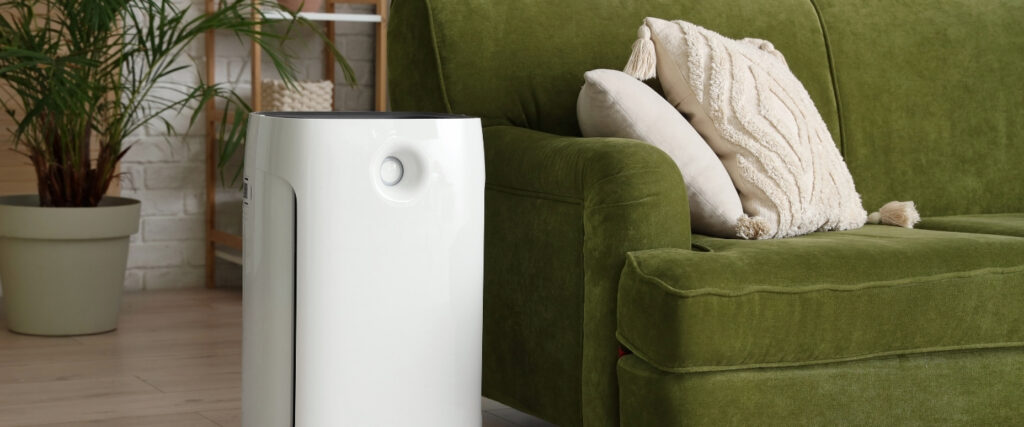
Do air purifiers help with sick building syndrome?
Air purifiers can form a useful part of your response to sick building syndrome, but they work best as a complement to addressing root causes — not as a substitute for doing so.
Air cleaning can be a useful addition to indoor air quality control alongside ventilation to help combat SBS. A good HEPA air purifier will capture fine particulate matter, dust, mould spores, and some VOCs. If your indoor air quality has been compromised by soot, creosote particles, or combustion byproducts from a poorly functioning chimney, an air purifier can help remove what’s already circulating in the air while you work on the underlying chimney issue.
That said, an air purifier won’t fix a blocked flue, a cracked liner, or a chimney that’s backdrafting. It can reduce particulate load, but it won’t stop carbon monoxide from entering the building. Carbon monoxide detectors are essential in any home with a solid fuel or gas appliance — they’re your early warning system for the most dangerous combustion gas of all.
The symptoms of sick building syndrome most often improve once you leave the affected building or once hazards inside it are removed. An air purifier might ease your symptoms, but resolving the source is what ends them.
For anyone using a wood burner or open fire, the advice is clear: regular sweeping, annual inspections, functioning CO detectors, and good ventilation are the foundation. An air purifier is a useful addition to that foundation, but it can’t replace it.
When to call a chimney sweep
If you’ve identified — or even suspect — that your chimney is contributing to poor indoor air quality, getting a professional sweep booked is the right first move. At The Sweeping Company, we carry out thorough domestic and commercial chimney sweeps alongside CCTV chimney surveys that give you a clear picture of your flue’s condition.
We’d also recommend getting your chimney inspected if you’ve recently moved into a property with an existing fireplace or woodburner, if you’ve had symptoms consistent with SBS and can’t find another obvious cause, or if you’ve noticed any signs of backdrafting — smoky smells in rooms when the fire isn’t lit, soot deposits around the fireplace, or alarms triggering without apparent reason.
Sick building syndrome is genuinely distressing, and it deserves to be taken seriously. If your chimney is part of the problem, it’s also one of the most straightforward parts to fix.


