
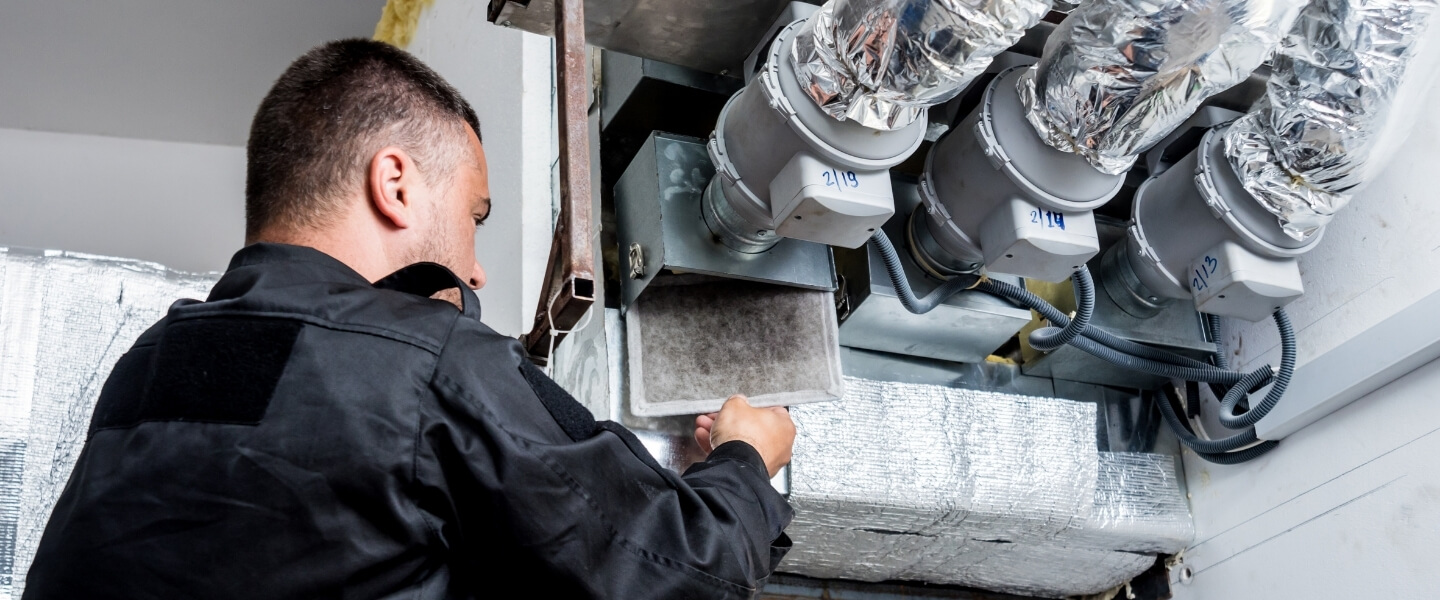
HVAC Maintenance Checklist: What Every Building Needs to Stay Safe, Efficient, and Comfortable
HVAC maintenance protects your building, your people, and your running costs. A well-maintained system gives you reliable temperature control, cleaner indoor air, better energy performance, and fewer unexpected callouts. When you stay ahead of issues, you also protect your legal responsibilities as a business owner or facilities manager — especially around indoor air quality, fire safety, and planned preventive maintenance requirements.
At The Sweeping Company, we support homes and commercial buildings across the South West with routine HVAC cleaning, inspection, and maintenance — from office block ventilation to kitchen extract systems and large-scale ductwork. This guide breaks down what HVAC maintenance involves, the types of maintenance you’ll come across, the schedule you should follow, and what happens during a professional visit.
What is HVAC maintenance?
HVAC maintenance is the routine inspection, cleaning, testing, and servicing of heating, ventilation, and air conditioning systems. The goal is to keep equipment safe, efficient, compliant, and operating at its intended capacity. Every system — from a domestic heat pump to a multi-storey air handling unit — performs better and lasts longer when looked after.
Maintenance covers components such as:
- Air handling units
- Ductwork
- Fans and motors
- Coils and condensers
- Filters
- Thermostats and controls
- Dampers and fire dampers
- Ventilation intakes and exhausts
- Refrigerant lines
A reliable checklist helps keep the process consistent across seasons, contractors, and building requirements.
What is the maintenance required for a HVAC system?
A full HVAC maintenance checklist focuses on performance, hygiene, and safety. No two systems are identical, but the core requirements stay consistent. These are the essentials we cover during both domestic and commercial servicing:
1. Ventilation and air handling checks
Ventilation is central to every HVAC system. A full inspection includes:
- Checking AHUs (Air Handling Units) for cleanliness, airflow, noise, and vibration
- Examining fans, belts, motors, and bearings
- Ensuring intake and exhaust pathways are free from obstructions
- Inspecting dampers, including fire dampers, for accessibility, correct operation, and compliance
- Verifying that airflow matches the building’s design requirements
Poor ventilation leads to stale air, heat build-up, and increased airborne contaminants. Regular checks protect indoor air quality in both homes and workplaces.
2. Filter cleaning and replacements
Filters trap dust, debris, and pollutants so your system can run efficiently. Over time, they clog and make equipment work harder. Depending on the system and environment, filters should be cleaned or changed every 1–3 months. Commercial buildings with high footfall or kitchens need more frequent care.
3. Coil and condenser cleaning
Evaporator and condenser coils accumulate dirt. When that happens, the system struggles to exchange heat, increasing energy use and reducing performance. Cleaning coils is a standard part of a professional maintenance visit.
4. Refrigerant checks
Low refrigerant levels indicate a leak or fault. Both are safety and efficiency concerns. A certified engineer should test pressures, look for leaks, and confirm that the system is operating within its designed range.
5. Electrical component inspection
Loose wiring, worn capacitors, and corroded terminals place strain on the system and create avoidable hazards. We check:
- Electrical connections
- Thermostat and control function
- Safety switches
- System response times
6. Mechanical checks
Moving parts need lubrication and alignment. A typical checklist includes:
- Motor lubrication
- Belt tension and alignment
- Fan blade condition
- Bearing checks
7. Drainage and condensate inspection
Blocked condensate lines cause water leaks, damp, and mould. Clearing the drainage pathway keeps everything safe and hygienic.
8. Ductwork cleaning and inspection
Dust, grease, and contaminants gather inside ductwork. This affects airflow, increases energy usage, and raises hygiene risks. Commercial premises — especially kitchens — must follow strict ductwork cleaning schedules to remain compliant.
9. Fire damper testing
Fire dampers must close correctly in the event of a fire to prevent smoke and flames spreading through ductwork. Annual testing is a legal requirement in commercial buildings. We test, clean, and record every damper for full compliance.
10. System performance testing
Once everything is cleaned and inspected, we test the system as a whole:
- Airflow readings
- Temperature control
- System cycling
- Energy performance indicators
- Noise and vibration levels
This ensures the system is functioning efficiently after the maintenance work is complete.
What are the four types of maintenance HVAC?
Understanding maintenance types helps you plan budgets and avoid downtime. HVAC sits within broader facilities management approaches, and you’ll see these four categories used across the industry:
1. Preventive maintenance
Routine, scheduled maintenance carried out to stop issues from developing. This includes cleaning coils, replacing filters, testing equipment, and inspecting ductwork. Preventive maintenance is the backbone of every safe, reliable HVAC system.
2. Predictive maintenance
Predictive maintenance relies on performance data, monitoring, and system analytics to determine when components need attention. It’s common in large commercial buildings with building management systems (BMS).
3. Corrective maintenance
Corrective maintenance fixes known issues, such as a faulty motor, a broken belt, or a refrigerant leak. It restores the system to normal operation. When preventive work is done well, corrective tasks stay minimal.
4. Reactive maintenance
Reactive maintenance happens when something fails unexpectedly. It usually results in downtime, safety concerns, and higher repair costs. Businesses tend to reduce this through strong preventive schedules.
What is the recommended maintenance schedule for HVAC?
HVAC systems perform best with a consistent schedule. We create maintenance plans around the season, the building type, usage levels, and compliance requirements. This is the standard timeline we recommend:
Monthly checks
Ideal for commercial sites or homes with heavy HVAC use.
- Clean or replace air filters
- Check thermostat settings
- Look for obvious airflow restrictions
- Inspect outdoor units for debris
- Confirm condensate lines are clear
Quarterly checks
Useful for busy buildings, hospitality venues, and offices.
- Inspect fans, belts, and motors
- Clean drain pans and lines
- Check refrigerant lines
- Test electrical connections
- Examine ductwork for visible dust build-up
Biannual maintenance (spring and autumn)
This is the core routine for most buildings.
- Coil cleaning
- Full system testing and calibration
- Outdoor unit deep cleaning
- Ventilation and intake inspection
- Lubrication of mechanical parts
- Filter changes
- Safety control testing
Spring maintenance prepares cooling systems for summer.
Autumn maintenance prepares heating systems for winter.
Annual maintenance
Annual checks are essential for legal compliance and long-term reliability.
- Fire damper testing
- Deep ductwork cleaning (commercial)
- Full refrigerant assessment
- Comprehensive electrical inspection
- Airflow and pressure testing
- Review of system performance data
- Validation of compliance documentation
Kitchen extract systems and specialist environments
Catering environments follow stricter schedules:
- High-use kitchens: Monthly to quarterly ductwork and extract cleaning
- Medium-use kitchens: Quarterly to biannual cleaning
- Low-use kitchens: Biannual to annual cleaning
Indoor air quality regulations, insurance requirements, and fire safety standards drive these timelines.
If you’re ever unsure how often your system should be serviced, a professional inspection gives you clarity quickly.
What to expect during HVAC maintenance?
A professional maintenance visit should feel structured, transparent, and thorough. At The Sweeping Company, we follow a clear process so building owners and managers feel confident about every step.
Initial system review
We start by understanding the system’s history, previous issues, and any areas you’re concerned about. This helps us target high-risk components and ensure nothing gets missed.
Full inspection
The engineer evaluates every accessible part of the system. You can expect checks on:
- AHUs
- Coils
- Motors and belts
- Fans and blowers
- Electrical components
- Ductwork and vents
- Refrigerant lines
- Controls and thermostats
- Dampers and fire dampers
Cleaning and servicing
We clean coils, fans, filters, housings, condensate drains, and ductwork (if booked). The goal is to restore airflow and help the system run efficiently.
Functional testing
Once cleaned, the system is tested to confirm proper operation:
- Temperature consistency
- System cycling
- Airflow measurement
- Noise and vibration
- Energy usage indicators
Safety checks
This includes electrical testing, fire damper testing, and ventilation compliance checks. For commercial buildings, these are essential for meeting regulatory responsibilities.
Documentation
You’ll receive a service report detailing:
- Work completed
- Component condition
- Any issues found
- Recommendations for repair or improvement
- Compliance notes (where relevant)
Reliable record-keeping helps with insurance, audits, and maintenance planning.
Why an HVAC maintenance checklist matters
A structured checklist gives you consistency, clarity, and accountability. It helps keep running costs down by ensuring equipment doesn’t waste energy, and it improves indoor air quality by removing the dust, debris, and contaminants that build up over time. Systems that are checked regularly experience fewer breakdowns and enjoy a longer lifespan, which means unexpected disruptions become far less common. A clear checklist also supports compliance with fire safety and ventilation requirements, helping building owners meet their legal responsibilities with confidence. With predictable maintenance costs, budgeting becomes easier, and workplaces become safer because equipment is operating as it should.
Buildings that follow a strong maintenance plan experience fewer interruptions, and everyone inside benefits from cleaner, healthier air.
How The Sweeping Company can help with your HVAC maintenance
We support commercial and domestic clients across the South West — from Frome to Bristol, Bath, Cardiff, Cheltenham, Gloucester, Swindon, Salisbury, Taunton, Yeovil, and beyond. Our trained and certified team keeps HVAC systems running safely and efficiently through a full range of services, including HVAC maintenance, AHU cleaning and inspection, ductwork and kitchen extract cleaning, fire damper testing and installation, ventilation compliance assessments, emergency callouts, and ongoing maintenance contracts. Every site receives a tailored plan shaped around its usage, building type, and compliance requirements.


