
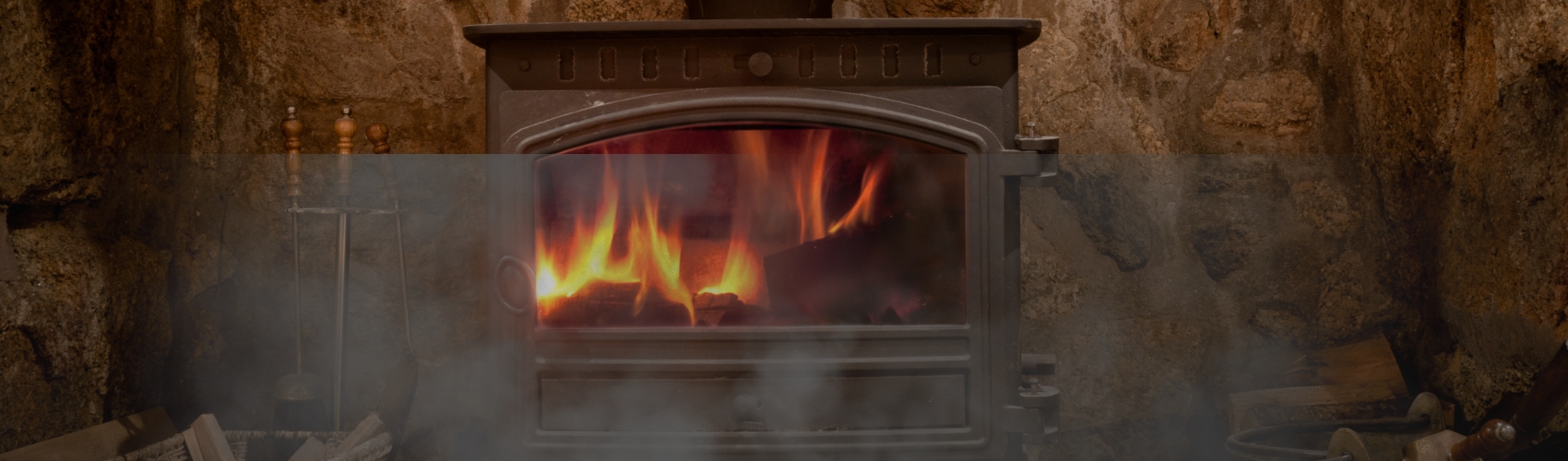
Why Does My Wood Burner Smoke When I Open the Door?
Smoke billowing into your room when you open your wood burner door isn’t just unpleasant — it’s a sign that something isn’t working quite right. Whether you’re running a cosy home stove or keeping the fires burning in a pub, restaurant, or hotel, understanding why this happens can save you a lot of frustration (and a lot of air freshener).
At The Sweeping Company, we’ve seen every kind of stove problem imaginable, from stubborn draw issues to blocked flues. The good news? Most cases of smoke spillage have straightforward causes — and fixable solutions.
Why does my fireplace smoke when I open the door?
When you open the door of a wood-burning stove, you interrupt the balance of air and pressure that keeps smoke moving up the flue instead of into the room. A well-functioning stove relies on good draft — the upward flow of warm air that carries smoke outside. If that airflow is weak or obstructed, the smoke takes the path of least resistance: straight into your living space.
Here are the most common reasons behind that smoky surprise:
1. Cold flue or poor draft
A cold chimney or flue doesn’t draw well. Before the stove warms up, cold air in the chimney can actually push downwards, preventing smoke from escaping. This is especially common after long periods without using the stove, or in older properties with tall, exposed chimneys that cool quickly.
Fix: Before lighting your fire, preheat the flue. Roll up a piece of newspaper, light it, and hold it near the flue opening for 30–60 seconds to create an upward draft. Alternatively, use a small kindling fire to gently warm the flue before adding larger logs.
2. Blocked or dirty chimney
A build-up of soot, creosote, or bird nesting material can dramatically reduce airflow through the flue. Even a partial blockage can cause smoke to spill back when you open the door.
Fix: Book a professional chimney sweep. At The Sweeping Company, we recommend sweeping at least once a year for wood burners — and more often for commercial settings like pubs or restaurants. Regular sweeping not only improves airflow but also prevents chimney fires.
3. Insufficient ventilation in the room
Modern homes are built to be airtight, which is great for energy efficiency but terrible for wood burners. Without enough air entering the room, your stove struggles to “breathe.” When you open the door, smoke can’t flow upward because there’s not enough incoming air to replace it.
Fix: Make sure your stove has a dedicated air vent or an open window nearby while in use. If you’re in a commercial property, proper ventilation is a legal requirement under fire safety regulations.
4. Opening the door too quickly
If you swing open the door in one go, you instantly break the air seal and disrupt the stove’s internal airflow. Smoke that was moving up the flue suddenly rushes out into the room.
Fix: Open the door slowly. Unlatch it and let it sit slightly ajar for a few seconds to equalise pressure before opening it fully. This gives the stove time to adjust and maintain upward airflow.
5. Overfilled or poorly arranged fire
If the logs are piled too close to the door or if the firebox is overloaded, smoke has nowhere to go but out when you open the door.
Fix: Keep your fuel towards the back of the firebox and maintain a good balance of fuel and airflow. Dry, well-seasoned wood (less than 20% moisture) burns hotter and cleaner, producing less smoke and creosote.
6. Negative air pressure
Extractor fans in nearby rooms (like kitchens or bathrooms) can actually pull air down your chimney, reversing the draft. The same applies if you have a mechanical ventilation system or an open-plan space with strong airflow dynamics.
Fix: Turn off extractors while using your stove. If negative pressure is an ongoing problem, you might need a chimney cowl or mechanical draught stabiliser installed — both services we offer as part of our chimney maintenance work.
Can you leave the door open on a wood burning stove?
No — a wood burner is designed to work with the door closed. The stove’s internal design regulates airflow to ensure efficient combustion, safe heat output, and minimal smoke.
Leaving the door open changes that balance completely. It lets too much oxygen in, causes the fire to burn erratically, and releases more smoke and particulates into your room. If you like the open-fire look, consider a glass-fronted stove with a large viewing window — you’ll get the same ambience without compromising air quality or safety.
For commercial properties, such as restaurants or hotels with feature stoves, open operation can also breach fire safety guidelines and insurance conditions. Always check your manufacturer’s manual and local fire safety regulations before modifying how your stove is used.
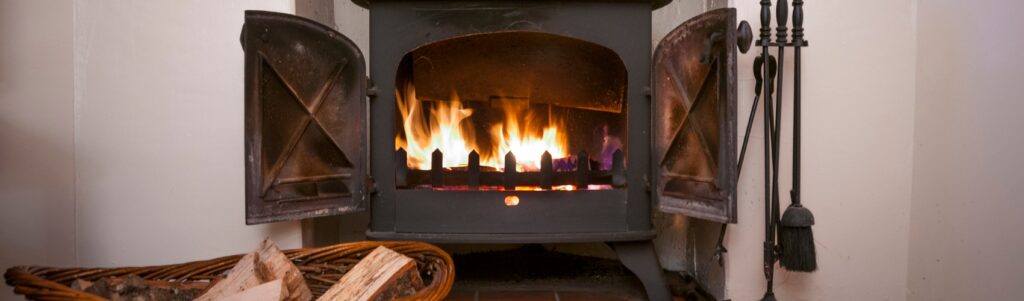
Does a fireplace burn better with the doors open or closed?
A properly fitted wood-burning stove always burns better with the doors closed. Here’s why:
- Efficiency: Closed doors keep heat inside the combustion chamber, where it’s used to fuel the burn — not lost to the room.
- Safety: Smoke, sparks, and embers stay contained.
- Cleaner air: A closed system limits particulate pollution indoors.
- Longer burn time: Controlled airflow helps wood burn more steadily, reducing how often you need to refuel.
Leaving the doors open effectively turns your stove into a regular fireplace, reducing efficiency by up to 75%. That means higher fuel costs, lower heat output, and more soot build-up in your flue — all of which make future smoke problems more likely.
How do I stop my wood stove from smoking when I open the door?
You can drastically reduce smoke spillage with a few simple habits and regular maintenance. Here’s what we recommend at The Sweeping Company:
1. Warm the flue first
As mentioned earlier, preheat the flue before lighting your main fire. This creates a consistent upward draft from the start.
2. Burn properly seasoned wood
Wet wood is the number one cause of smoky fires. It creates steam, cools the flue gases, and weakens the draft. Use logs with a moisture content of 20% or less — ideally certified as “Ready to Burn.”
3. Keep your chimney clean
Even small amounts of soot can disrupt airflow. Schedule professional sweeps annually, or every six months if you burn wood daily.
At The Sweeping Company, we use CCTV chimney inspections to identify early signs of obstruction, cracks, or tar build-up before they become major issues. For commercial and domestic clients, we also offer maintenance contracts to keep flues compliant with fire safety standards year-round.
4. Check your door seals
Worn or damaged rope seals can allow air leaks that change how the stove draws. This can cause the fire to burn unevenly and smoke when opened.
5. Avoid opening the door at peak burn
Open the stove door only when the fire has settled into glowing embers, not when flames are roaring. This minimises the pressure difference and reduces smoke escape.
6. Install a flue fan or anti-downdraught cowl
If your chimney design or local wind conditions make draft control difficult, mechanical solutions can help. A flue fan actively pulls smoke upward, while an anti-downdraught cowl prevents wind from forcing air back down the chimney.
7. Balance your room ventilation
In airtight modern homes, a small air vent near the stove can make a big difference. For larger or commercial spaces, ensure your HVAC system supports the stove’s airflow rather than competing with it.
When to call a professional
If you’ve checked all the above and smoke still escapes when you open the door, it’s time for an expert inspection. Persistent smoke issues can indicate:
- A partially blocked or damaged flue liner
- Incorrect stove installation or flue sizing
- Poor chimney height or location
- Tar condensation inside the flue
Our team at The Sweeping Company can carry out smoke tests, CCTV surveys, and draught assessments to diagnose the problem. We’re HETAS-approved, Sweep Safe certified, and trusted by homeowners and businesses across Frome, Bath, Bristol, and the South West to keep their chimneys safe and compliant.
Solving your wood burner smoke issues for good
Smoke escaping when you open your wood burner door is a sign that something’s off — but it doesn’t have to ruin your evenings by the fire. From improving ventilation and using dry wood to scheduling a professional sweep, small changes can make a big difference.
If your stove is still smoking after trying these fixes, get in touch with The Sweeping Company. We’ll inspect, clean, and restore your chimney system to full working order — safely, efficiently, and with minimal disruption.
Because a well-maintained stove doesn’t just look better. It burns better, draws better, and keeps your air cleaner for everyone in the room.


