
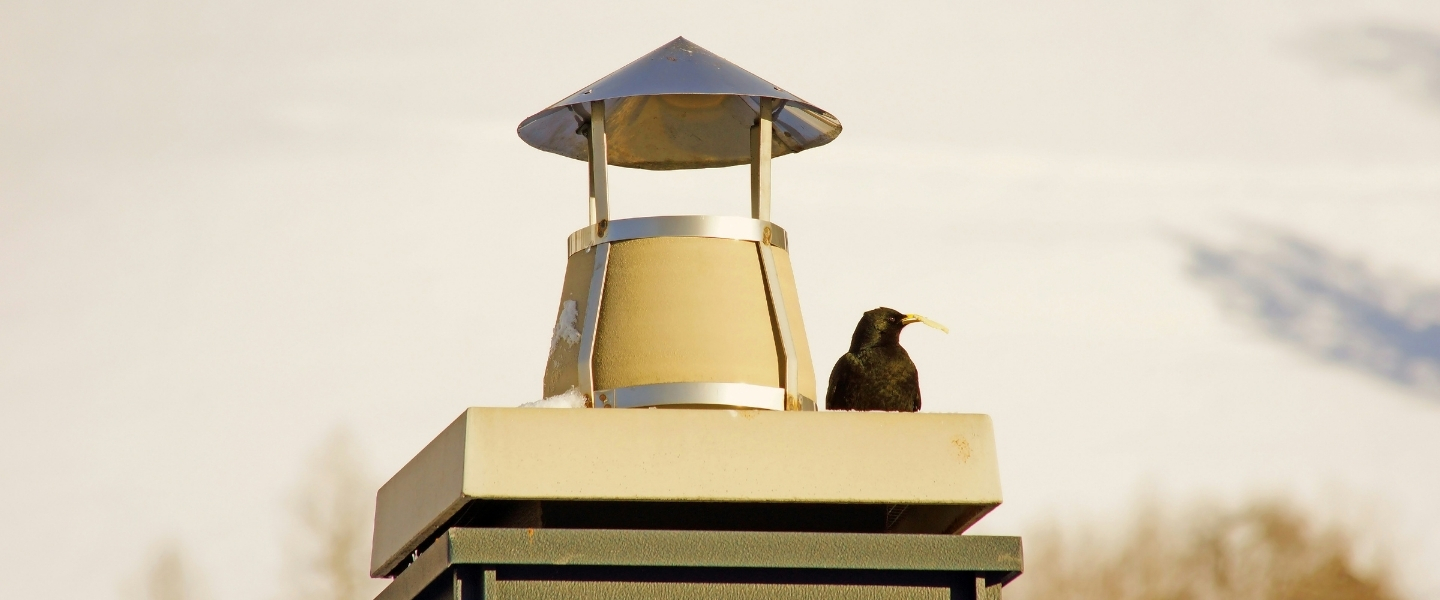
What Is a Chimney Cap and Does Your Home Actually Need One?
A chimney cap is a cover fitted to the top of a chimney pot. It’s designed to let air flow through the flue while keeping out the things you don’t want in there — rain, birds, leaves, and general wind-driven debris. Depending on the type, it might be made from terracotta, galvanised steel, or aluminium, and it sits directly over the pot, held in place by straps, bolts, or a friction fit.
They’re sometimes called chimney cowls or pot covers, and the terminology varies depending on who you ask and what product you’re looking at. For the purposes of this guide, a chimney cap is any cover fitted to a pot with the primary purpose of protecting the opening. Cowls tend to refer to products designed specifically to improve draw or prevent downdraught, though the two terms are used interchangeably in everyday conversation.
What matters more than the vocabulary is understanding why a cap matters, what happens if you don’t have one, and how regular chimney sweeping fits into the picture. Let’s get into it.
Is a chimney cap a good idea?
For the vast majority of chimneys — active or disused — yes, a cap is a good idea. Here’s why.
Rain is the single biggest cause of chimney deterioration in the UK. Our climate means your chimney is exposed to significant moisture throughout the year, and an uncapped pot is an open invitation for water to enter the flue directly. Once water gets in, it works its way into the mortar, the liner, and the brickwork. Over time, this causes the internal structure to degrade, often without any visible signs from ground level until the damage is already serious.
A cap doesn’t just block rain, though. It also deters birds from nesting inside the flue. Bird nests are one of the most common causes of chimney blockages we encounter, and they’re almost entirely preventable. Jackdaws in particular are persistent and will return to the same chimney year after year. A cap with a mesh design stops them getting in without restricting airflow.
If you have an open fireplace or wood-burning stove in regular use, a cap also helps reduce the amount of debris and soot that blows back down into the hearth when the fire isn’t lit. In exposed or coastal locations, it can reduce downdraught — the cold wind that pushes back down the flue and makes starting a fire more difficult.
For disused chimneys, a cap is arguably even more important. A fireplace that’s been blocked off or sealed at the register plate still needs the chimney to breathe to prevent condensation buildup inside the stack. A vented cap allows that airflow while keeping moisture and pests out.
The bottom line: chimneys are expensive structures to maintain, and a cap costing a relatively modest sum is sound investment in the long-term health of your stack.
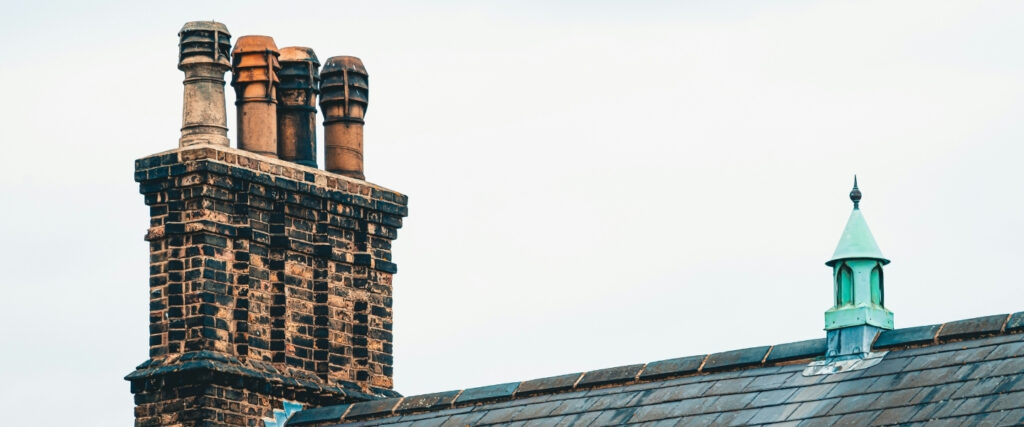
What happens if my chimney doesn’t have a cap?
Without a cap, the chimney opening is exposed. That sounds simple, but the consequences are wide-ranging.
Water ingress is the most immediate concern. Rain falls directly into the flue and accumulates on internal surfaces. In chimneys with a clay or pumice liner, this accelerates cracking and deterioration. In older brick-built flues without a liner, moisture soaks into the masonry and damages the mortar joints — a process that’s worsened dramatically by freeze-thaw cycles in winter.
The moisture doesn’t stay in the flue, either. It migrates through the chimney structure and can appear as damp patches on chimney breast walls, staining on wallpaper or plaster, and discolouration around the fireplace. Homeowners often chase damp problems around chimney breasts for years without identifying the uncapped pot as the source. It’s one of the first things we check when a customer reports unexplained damp near a chimney.
Without a cap, birds can nest freely. A nest that builds up in the flue reduces its effective diameter, which affects draw and can create a fire hazard if the fireplace is in use. In some cases, nests can completely block a flue. Carbon monoxide can accumulate in the property if combustion gases can’t vent properly — a serious safety risk.
Debris accumulation is another issue: leaves, twigs, and general windborne material settle in the flue over time, restricting airflow and adding to the potential for blockages.
The absence of a cap also means the chimney pot itself is exposed to weathering with no protection. Terracotta pots are particularly vulnerable to frost damage when they’re saturated with water — the moisture expands as it freezes and can cause the pot to crack or crumble.
Will capping a chimney stop damp?
A cap will stop rain entering through the top of the chimney pot, and in many cases that’s the main source of damp in the flue. So yes — fitting a cap will address that specific entry point.
However, it’s important to understand that chimneys have more than one potential source of moisture. The cap deals with rain ingress from the top. It doesn’t address:
- Flashing failures: The lead or felt flashing around the base of the chimney stack where it meets the roof can deteriorate over time, allowing water to track down into the ceiling and wall below. Flashing is a roofing issue, separate from the cap itself.
- Condensation: Particularly in disused chimneys, warm moist air inside the property can condense on the cooler surfaces of the flue, especially if ventilation through the chimney is poor. A vented cap helps by keeping air moving, but condensation can still occur in some situations.
- Rising damp and general wall damp: Chimney breasts are sometimes damp for reasons entirely unrelated to the chimney itself, including plumbing, poor wall insulation, or ground-level moisture.
A capped chimney that’s regularly swept is in a much better position to resist damp than one that’s left unchecked. Sweeping removes the soot and debris that can trap moisture against internal surfaces, allows a professional to inspect the inside of the flue for cracks or deterioration, and ensures any blockages are cleared before they cause problems.
If you’re dealing with damp around a chimney breast and you’re unsure of the cause, a chimney survey using a CCTV camera is the most reliable way to see exactly what’s happening inside the flue. We can drop a camera down the stack and give you a clear picture of the internal condition — no guesswork required.
How does chimney sweeping help protect your chimney?
A chimney cap handles what comes in from the top. A chimney sweep handles what builds up from the inside.
Even a capped chimney needs sweeping regularly. Soot and creosote accumulate in the flue with every fire you light. Creosote in particular is a concern — it’s a combustible byproduct of burning wood, and it builds up on the flue walls in layers. At its most concentrated, it becomes a hard, tar-like deposit that’s both difficult to remove and a significant fire risk.
Regular sweeping prevents that buildup from reaching dangerous levels. It also clears any moisture-trapping debris from the base of the flue, removes bird nesting material if any has found its way in, and lets the sweep inspect the condition of the chimney from below.
At The Sweeping Company, our sweeps carry out a visual inspection as part of every service. We look for signs of deterioration in the liner, check that the register plate or throat is in good condition, and flag anything that might need attention. A cap and a regular sweep schedule work together — one protects the top of the system, the other keeps the inside in good order.
For landlords, annual sweeping is an essential part of satisfying your duty of care to tenants, and we provide a landlord certificate after every sweep. For homeowners with a working fireplace or stove, we’d recommend sweeping at least once a year — twice if you’re burning frequently through the colder months.
Can I install a chimney cap myself?
For a disused chimney at a single-storey extension, or where access to the roof is straightforward and safe, some caps are genuinely designed for DIY installation. They’re sized to fit over the pot opening and held in place with adjustable straps or bolts. If you’re comfortable working at height with appropriate safety precautions, and the product you’ve chosen comes with clear sizing guidance, self-installation is achievable.
That said, there are a few important considerations before you climb up there.
First, sizing matters. Caps come in a range of sizes to fit different pot diameters, and an ill-fitting cap can be blown off in high winds or sit insecurely enough to let in water despite being in place. You’ll need to measure the internal or external diameter of the pot accurately before ordering — the chimney cowls market is well stocked, but the range of sizes and fixing types means getting the wrong one is easy to do.
Second, working on a roof always carries risk. The vast majority of serious DIY injuries involve working at height, and a steep or wet roof is a significant hazard. We’d always recommend using a professional roofer or chimney specialist if there’s any doubt about safe access.
Third, for active flues — chimneys connected to a fireplace or stove that’s in use — the cap needs to be rated for the fuel type and sized to allow adequate airflow for the appliance. A cap that restricts draw on a wood-burning stove can cause smoke to spill back into the room and, more seriously, impair combustion. For working chimneys, having the cap fitted by a HETAS-registered professional gives you confidence that it’s been installed correctly and won’t affect the safe operation of the appliance.
The straightforward answer: for a disused chimney with straightforward rooftop access, DIY is reasonable. For an active flue or any situation involving difficult access, get a professional in.
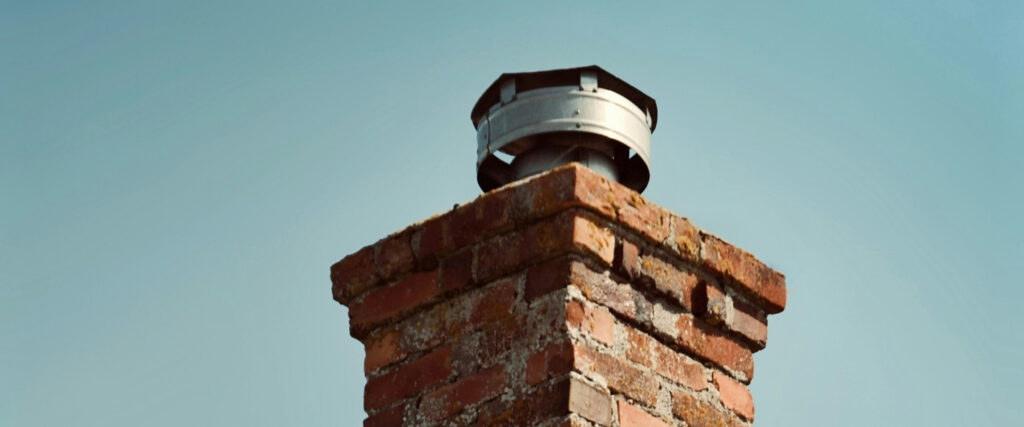
What types of chimney cap are there?
Caps come in a few broad categories, and which is right for you depends on whether your chimney is in use and what problem you’re primarily trying to solve.
Standard rain caps sit over the pot opening and prevent rain entry while allowing airflow. They’re the most common type for both disused and active chimneys and are suitable for most UK properties.
Vented caps for disused chimneys are designed specifically for sealed-off chimneys. They allow enough airflow to prevent condensation buildup without letting in rainwater, birds, or debris. If you’ve blocked up a fireplace but still have an open pot above the roofline, a vented cap is the right choice.
Mesh bird guards have a mesh-covered design that blocks birds from entering without restricting airflow. They’re particularly effective in areas where jackdaws or pigeons are common. Many standard caps now incorporate mesh as a standard feature.
Anti-downdraught cowls are designed for chimneys where wind causes cold air to push back down the flue, making fires difficult to light or producing puffs of smoke into the room. These are more specialised than a basic cap and are worth considering if downdraught is a recurring problem.
For most homeowners, a straightforward rain cap with integrated mesh is all that’s needed, and the upfront cost is small relative to the protection it provides.
A chimney cap is one part of the picture
A chimney cap does a valuable job, but it’s one component of a chimney system that needs attention across the board. The cap protects the top. The flashing protects the junction with the roof. The liner protects the inside of the flue. And regular sweeping keeps the whole system performing safely and efficiently.
If you’re not sure whether your chimney has a cap, or whether the one that’s there is in good condition, the easiest way to find out is to have a sweep carry out an inspection. We can check the pot and cap from rooftop level as part of our service, and if there’s something that needs addressing, we’ll tell you clearly what it is and what your options are.
A well-maintained chimney — capped, swept, and inspected regularly — is one that will serve you reliably for years to come.


