
How to Sweep a Chimney Yourself (And When to Call the Professionals)
Regular chimney sweeping is one of those jobs that most homeowners know they should be doing — but few feel confident about. Whether you’ve got an open fireplace you use every winter, a wood-burning stove you rely on heavily, or a gas fire you’ve not thought much about, keeping your chimney clean is fundamental to your safety at home.
At The Sweeping Company, we sweep chimneys every single day, and we know the questions that come up time and again. So here’s our honest, practical guide to chimney sweeping — covering the DIY route, what we do as professionals, and how to make the right call for your home.
Why chimney sweeping matters
Soot and creosote build up inside your chimney every time you burn fuel. Creosote in particular is highly flammable — it’s the primary cause of chimney fires in the UK. A chimney fire can burn at over 1,000°C, damaging your flue lining, cracking masonry, and in serious cases spreading to the rest of your home. Beyond fire risk, a blocked or dirty chimney restricts the draw of your fire, pushes carbon monoxide back into your living space, and leads to damp, unpleasant smells, and long-term structural damage.
Sweeping your chimney removes that build-up, improves your fire’s performance, and gives whoever does the job a chance to spot any damage before it becomes expensive.
Can I sweep a chimney myself?
Technically, yes. It’s a physical task, not a legally protected trade, and with the right equipment and a methodical approach, a reasonably capable homeowner can do a basic chimney sweep. Here’s how it’s done:
What you’ll need:
- Chimney sweep rods (typically 1-metre sections that screw together)
- A brush head sized to your flue (circular for round flues, square for square)
- A fireplace dust sheet or chimney sweep cover
- Heavy-duty bin bags
- A vacuum cleaner (a specialist ash vacuum is ideal)
- Protective gloves, safety glasses, and an N95 dust mask
- A torch
The basic chimney sweeping process
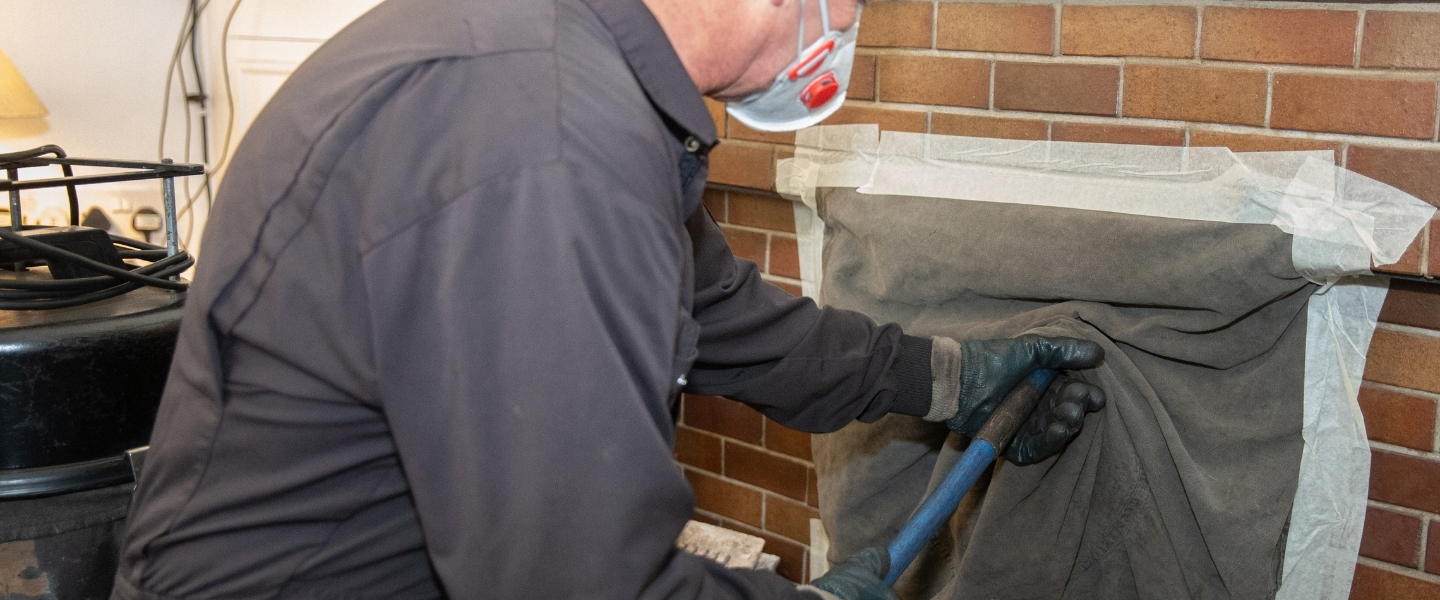
Start by removing the grate, fireguard, and any fire accessories. Lay dust sheets across the fireplace opening and as much of the surrounding floor as possible — soot travels further than you’d expect. Seal the fireplace opening with your chimney sweep cover, leaving just a small gap for the rods to pass through.
Feed your first rod and brush up into the flue from the fireplace. Screw additional rods on as you go, working the brush up and down with each section. You’re aiming to push the brush all the way to the top of the chimney. Once you’ve reached the top, work the rods back down, continuing to scrub as you go. Then carefully remove your rods, remove the dust cover, and use your vacuum to clear the debris from the fireplace and smoke chamber.
That’s the straightforward version. In reality, there are complicating factors — bends in the flue, register plates and throat restrictors that need removing, debris that’s compacted or damp, and blockages that a standard brush won’t shift. If you haven’t done it before, the learning curve is steeper than it looks.
Our honest take? DIY chimney sweeping is achievable, but the margin for error is real. You can push debris into areas where it’s hard to retrieve, miss significant build-up in bends or at the base of the flue, and — critically — you won’t have the professional-grade camera inspection equipment to check the condition of your liner or spot cracks and damage. You can keep a chimney clear, but you can’t inspect it the way a professional can.
Can I legally sweep my own chimney?
There’s no law in the UK that says only a qualified professional can sweep a chimney. So yes, it’s legal to sweep your own chimney.
However, legality and wisdom aren’t the same thing. Two areas where this matters in practice:
Home insurance: Many home insurance policies require that your chimney is swept by a “qualified” or “competent” professional. If you make a claim related to a chimney fire and you’ve only swept it yourself, your insurer may dispute the claim. It’s worth checking your policy wording carefully before you decide to go the DIY route.
Certificates: A registered chimney sweep — such as a member of NACS, the Guild of Master Chimney Sweeps, or a HETAS-registered professional — can issue you with a sweep certificate. This is your written record that the job was done, and it’s what your insurer will ask for if there’s ever a claim. You can’t produce that certificate yourself.
For these reasons, we’d always recommend using a registered professional sweep for your annual clean, even if you do occasional interim brushing yourself during heavy-use periods.
How messy is chimney cleaning?
With a professional sweep, it should barely be messy at all. This is one of the biggest concerns we hear from customers, and it’s one of the biggest advantages of hiring someone who does this for a living.
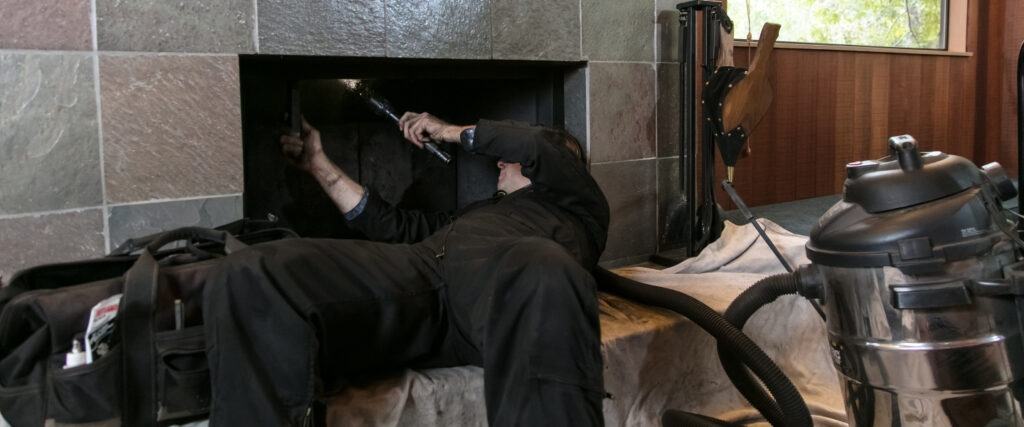
Professional sweeps use specialist containment equipment — purpose-built chimney covers that seal the fireplace opening, high-powered HEPA-filtered vacuum systems that run continuously throughout the sweep, and dust sheets that protect your floors and furniture. When we leave, the fireplace area should be cleaner than when we arrived.
DIY sweeping is a different story. Without professional-grade containment, fine soot particles get into the air and settle across a far wider area than most people expect. Soot is extremely fine, travels in air currents, and is very difficult to clean from fabrics, carpets, and soft furnishings. If you’re sweeping yourself, seal the fireplace opening as thoroughly as you can, keep the room well ventilated, cover your furniture, and have a powerful vacuum ready. Even then, expect some mess.
If you’re concerned about your home staying clean — particularly if you have light carpets, pets, or young children — this is one of the strongest practical reasons to bring in a professional.
How long can a chimney go without cleaning?
This depends entirely on how you use it and what you burn. As a general rule, the industry standard guidance in the UK — backed by organisations like HETAS and NACS — is:
- Open fires burning wood: sweep at least twice a year
- Wood-burning or multi-fuel stoves: sweep at least once a year (twice if used heavily)
- Gas fires: at least once a year
- Oil-fired appliances: at least once a year
- Smokeless coal: at least once a year
- Bituminous (house) coal: twice a year
If you’re burning wood regularly through winter, once a year is an absolute minimum — and twice is better. Wet or unseasoned wood produces far more creosote than well-seasoned or kiln-dried wood, so if you’ve been burning anything less than perfectly dry logs, err on the side of sweeping more often.
Leaving a chimney unswepped for several years is genuinely risky. We’ve attended properties where chimneys haven’t been swept for a decade and found them almost entirely blocked — sometimes with bird nests, sometimes with dangerously thick creosote deposits. The longer you leave it, the harder and more expensive the job becomes.
When’s the best time of year to clean a chimney?
Spring and summer are the ideal times. Once you’ve finished using your fire for the season — typically around March or April — booking a sweep makes a lot of sense. The soot and creosote from winter’s burning gets cleared before it has months to harden and settle. It also means your chimney is ready to use the moment temperatures drop again in autumn, without the last-minute autumn scramble when every sweep in the country is suddenly in high demand.
That said, autumn sweeping — September and October — is the most popular time, and for good reason. Many people simply don’t think about their chimney until they want to light their first fire of the season. We’d just encourage you to book early if you’re going down that route, because availability fills up fast.
The one time we’d caution against sweeping is mid-winter when you’re using your fire daily and it’s very cold — not because it can’t be done, but because the timing works against you. If there’s urgency (a smoking fire, suspected blockage, or you’ve moved into a property with no sweep history), don’t wait. Call a sweep regardless of the season.
How long does a chimney sweep take?
A standard professional chimney sweep takes between 45 minutes and an hour for a straightforward job. That covers a typical open fireplace or stove with a single flue run and no complications.
More complex jobs take longer. If we need to sweep multiple flues, clear a blockage, remove a bird’s nest, sweep a particularly tall chimney, or carry out a camera inspection, you’re looking at anywhere from 90 minutes to several hours. We’ll always give you a realistic time estimate when you book.
DIY sweeping tends to take longer, especially the first time. Getting set up, getting the rods and brush moving smoothly, cleaning up afterwards — allow a good two to three hours if you’re doing it yourself without experience.
Do I need my chimney swept if I have a log burner?
Yes — absolutely. This is one of the most common misconceptions we encounter. Many people assume that because a wood-burning stove is an enclosed appliance with controlled airflow, it produces less mess and therefore needs less maintenance. That’s half right: a well-operated stove burning good quality, seasoned wood does produce less creosote than an open fire burning damp wood. But it still produces some, and that build-up still needs to go somewhere.
Stoves also operate at higher temperatures than open fires, which can stress your flue liner over time. Sweeping gives us the chance to check the liner, the seals, the collar connection, and the condition of the stove itself. Many stove manufacturers actually require annual sweeping as a condition of their warranty, and your home insurance may require evidence of regular sweeping in the event of a chimney-related claim.
If you’ve got a log burner, please don’t skip the annual sweep. It’s not optional.
Do modern chimneys need cleaning?
Yes. There’s no such thing as a self-cleaning chimney, regardless of how new it is or what material it’s made from. Modern flue systems — whether that’s twin-wall insulated flue pipe, a pumice liner, or a stainless steel flexible liner — all accumulate deposits in the same way as traditional brick chimneys.
In fact, because modern appliances are often highly efficient and burn at lower flue temperatures, they can sometimes produce more condensation and tarry deposits than older, less efficient systems. New-build properties with purpose-built flue systems still need regular sweeping.
If someone tells you your chimney doesn’t need sweeping because it’s new or because you have a modern stove, they’re wrong.
What happens during a professional chimney sweep?
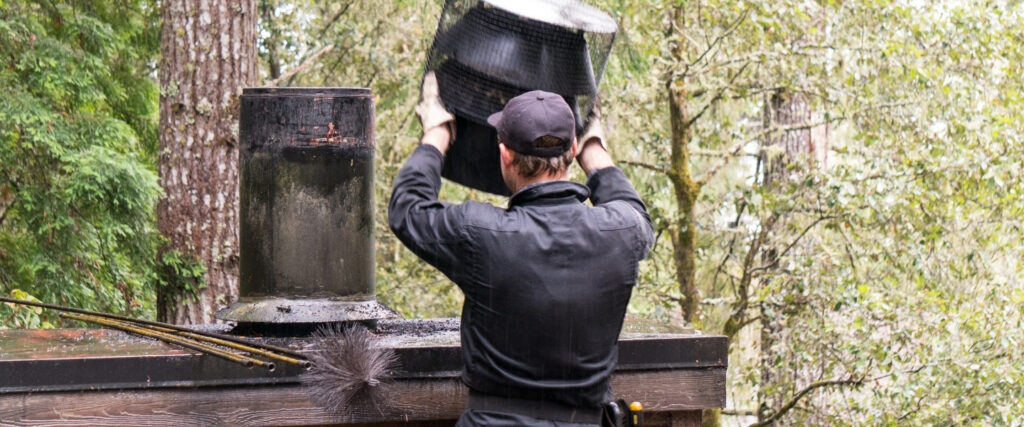
When a sweep from The Sweeping Company arrives at your property, here’s what to expect. We’ll start with a quick visual check of your fireplace, stove, and the accessible parts of the flue — looking at the condition of the appliance, the seals, the throat or register plate, and anything that might flag a problem. We then set up our containment system and sweep the full length of the flue from below, using rods and a correctly-sized brush for your flue dimensions.
Once the sweeping is complete, we clear all debris and — where applicable — carry out a camera inspection of the flue to check the liner condition and flag any damage or obstructions. We’ll then talk you through what we found, give you any relevant advice, and issue your sweep certificate.
The whole visit is straightforward and low-disruption. We treat your home with respect, we wear overshoes, and we leave everything clean.
A clean chimney is a safe chimney — let’s keep it that way
You can sweep your own chimney, and we’ve given you the honest detail on how to do it. But the combination of insurance requirements, the lack of a sweep certificate, the risk of missing damage you can’t see, and the very real potential for mess means that for most homeowners, a professional annual sweep is the right call.
At The Sweeping Company, we work with homeowners and commercial clients across the UK, and we take the job seriously. A sweep certificate from a registered professional isn’t just a piece of paper — it’s your proof that the most important safety check in your home has been done properly.
If you’d like to book a sweep, get in touch. We’re always happy to answer questions before you commit, and we’ll give you a straight, honest answer about what your chimney needs.


