
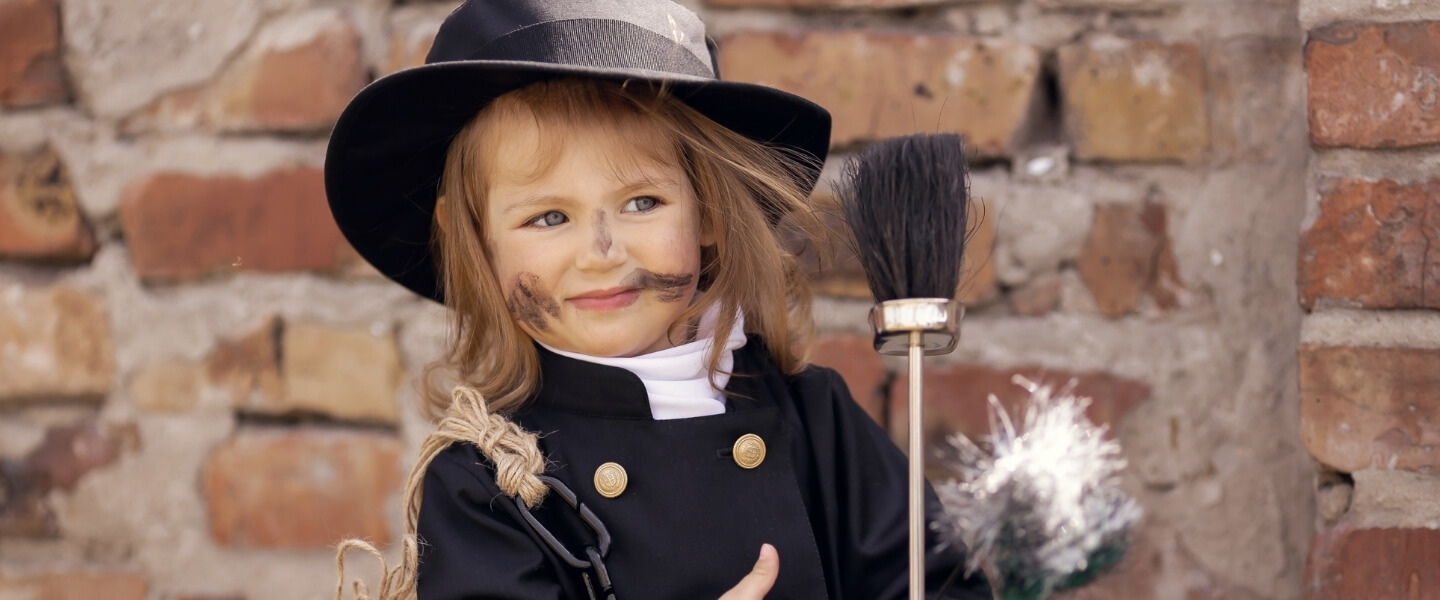
Victorian Chimney Sweeps: From Child Labour to Certified Professionals
Victorian chimney sweeps are an unforgettable part of British history — but not for pleasant reasons. What we now see as a respectable, safety-critical trade was once a dangerous and exploitative job, often carried out by children as young as six. Today, the role of a chimney sweep is professional, highly skilled, and essential to fire safety — but it’s a world away from the soot-stained streets of Victorian Britain.
At The Sweeping Company, we take pride in continuing the legacy of this trade with modern training, regulation, and care for both people and properties. Here’s how chimney sweeping has evolved from one of the darkest corners of the Industrial Revolution into a respected and regulated profession.
What did a chimney sweep do in Victorian times?
In the 1800s, a Victorian chimney sweep’s main job was the same as ours today — to keep chimneys clear of soot, blockages, and dangerous build-up that could cause fires or carbon monoxide poisoning. But how they did it was vastly different.
Victorian houses relied heavily on coal fires for heat and cooking. This meant chimneys were used daily, quickly clogging with soot and tar. A clean chimney wasn’t just for efficiency — it was a matter of life and death. Poorly maintained chimneys could catch fire or fill homes with toxic fumes.
Because chimneys in Victorian houses were narrow and often twisted, the work was done by children known as “climbing boys.” They were forced to crawl up inside the flues — sometimes just nine inches wide — scraping soot loose with their hands or brushes. Their master sweep would collect the soot at the bottom and sell it on as fertiliser.
There were no safety regulations, no proper equipment, and no concern for the children’s health. It was dangerous, dirty, and dehumanising work.
How young were Victorian chimney sweeps?
Shockingly young. Most climbing boys started between the ages of 6 and 8, though some were even younger. Many were orphans or sold by impoverished parents into “apprenticeships” with master sweeps. The Children’s Employment Commission of 1863 described cases of boys as young as 4 being used for chimney sweeping.
The children worked long hours, often from before sunrise to late at night. They slept in basements or outhouses, covered in soot, rarely washed, and were often beaten if they refused to climb. If a child got stuck — which was common — they could suffocate or die from burns when fires were lit below.
The cruelty of this practice led to growing public outrage and, eventually, legal reform.

The long road to change: Laws that banned child sweeps
It took almost a century for meaningful protection to come into place. Early laws were weakly enforced, and many sweep masters ignored them.
- 1788: The first Chimney Sweepers Act attempted to stop the use of child sweeps under 8 years old, but it lacked enforcement.
- 1834: A new Act raised the minimum age to 14, but again, prosecutions were rare.
- 1840: The Chimney Sweepers and Chimneys Regulation Act made it illegal for anyone under 21 to climb a chimney — but the trade continued underground.
- 1864: Lord Shaftesbury’s Chimney Sweepers Regulation Act finally introduced real penalties for those exploiting children.
- 1875: The Chimney Sweepers Act gave police the power to arrest anyone found using child labour. This marked the true end of the climbing boys era.
Today, chimney sweeping is a certified profession with strict safety standards, training programmes, and industry regulation — a world away from its grim beginnings.
Who was the famous child chimney sweep?
One name stands out: George Brewster, often remembered as the last child chimney sweep in Britain.
In 1875, George was just 12 when he died after becoming stuck in a chimney at Fulbourn Hospital near Cambridge. His death shocked the nation and finally forced the government to act. Lord Shaftesbury used George’s case to push through the 1875 Act, outlawing child labour in the trade once and for all.
George’s death is often seen as the moment Britain finally took responsibility for protecting working children. His story remains a sobering reminder of the human cost behind progress.
What illnesses did chimney sweeps get?
The health risks faced by Victorian chimney sweeps were severe. Working conditions were filthy and physically brutal.
Common illnesses included:
- Respiratory disease: Constant exposure to soot, coal dust, and ash caused chronic coughs, asthma, and lung infections.
- Burns and disfigurement: Climbing boys often suffered burns on their elbows and knees from hot flues, as well as cuts from sharp bricks.
- “Soot wart”: A form of cancer first described by Sir Percivall Pott in 1775, now recognised as the first occupational cancer ever recorded. It developed from prolonged contact with soot on the skin.
- Deformities: Many sweeps grew up with stunted limbs, spinal issues, and curved backs due to years of crawling in confined chimneys.
- Eye damage and blindness: Soot in the eyes often caused inflammation and long-term damage.
It’s hard to imagine these conditions today, but they shaped the health and safety standards that now define our industry.
The tools of the trade: Then vs now
Victorian sweeps relied on rudimentary tools — or, more often, none at all. Children used metal scrapers, wire brushes, or even just their hands. Their “uniform” was usually a soot-covered rag or sackcloth.
Modern sweeps, like our team at The Sweeping Company, use advanced equipment and technology designed for safety, efficiency, and cleanliness:
- Rotary power sweeping systems: Flexible rods with mechanical brushes that safely clean all types of flues.
- CCTV inspections: Small cameras allow us to check for blockages, damage, or nesting without guesswork.
- Vacuum extraction systems: High-powered HEPA vacuums remove soot and debris, keeping homes clean and the air safe.
- Protective gear: Sweeps now wear respiratory masks, gloves, and protective clothing — and we’re fully insured and certified.
What was once a physically punishing job for children is now a respected trade requiring training, technical knowledge, and professional accreditation.
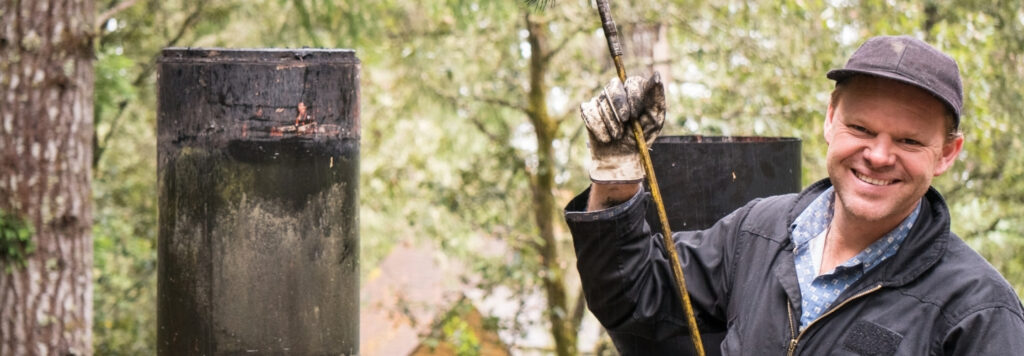
Chimney sweeping today: A regulated, professional service
At The Sweeping Company, our sweeps are trained and accredited through organisations like Sweep Safe, HETAS, and NAAD UK. This ensures we meet the highest standards in fire safety, ventilation hygiene, and environmental care.
Our work covers everything from domestic chimney sweeping and pizza oven cleaning to commercial HVAC ductwork and fire damper testing. Every service we provide is guided by health and safety legislation and industry best practice — something Victorian sweeps could only have dreamed of.
We also issue certificates for every sweep, giving customers official proof their chimney has been cleaned to safety standards — vital for home insurance and property compliance.
How often should you have your chimney swept today?
The recommended frequency depends on your fuel type and usage:
- Wood-burning or multi-fuel stoves – at least twice a year
- Coal fires – twice a year
- Oil or gas fires – once a year
- Commercial kitchens and HVAC systems – as per contract or regulatory schedule
Regular sweeping reduces fire risk, improves appliance efficiency, and helps protect your home or business from dangerous fume build-up.
It’s a small price to pay for peace of mind — and a far cry from the perilous conditions of Victorian times.
What Victorian chimney sweeps taught us about safety and reform
The Victorian chimney sweep reminds us of how far we’ve come as a society. What was once a grim reality for thousands of children has become a respected trade that safeguards homes, lives, and livelihoods.
So, the next time you book your annual chimney sweep, you’re not just keeping your flue clean — you’re part of a long and hard-fought history of safety, progress, and care.
And if you’re based in the South West — from Bristol and Bath to Frome, Swindon, Salisbury, and Cheltenham — our team at The Sweeping Company is always ready to help.
We’ll keep your chimney safe, efficient, and compliant — no soot-covered climbing boys required.


